
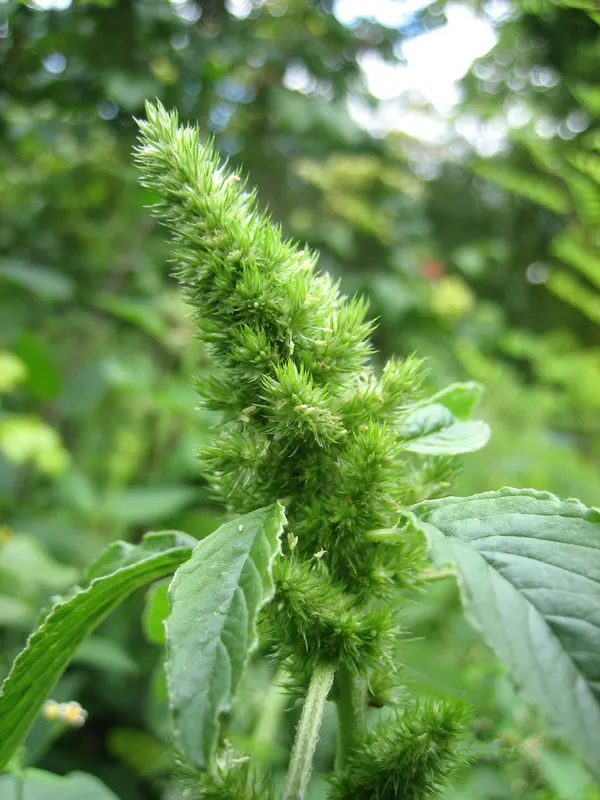
Amaranth / pigweed
Amaranthus retroflexus
Other names: Amaranth / pigweed
Edible plantPhoto credit: Lynk media (Wikimedia Commons)
Safety information
Safety information
Toxicity: None known as a cooked green in normal amounts. Like fat-hen, Amaranthus readily accumulates nitrates and oxalates from rich soil — cook, eat young, avoid heavily fertilised/contaminated ground (livestock nitrate poisoning documented from gorged raw plants).
Contraindications: Kidney stones (oxalate); infants (nitrate); avoid large raw amounts from rich soils.
Interactions: Oxalate may bind minerals; none clinically significant at cooked-food amounts.
Evidence level
Supported by laboratory or animal studies; not yet confirmed in humans.
Preparations
cooked · young leaf/shoot
Part used: young leaf/shoot
Traditional use: greens in pkhali/soups; everyday foraged pot-herb(Folk and historical sources have not been validated by clinical research.)
Dosage note (descriptive only): cook; eat young
Edibility
Edible parts: young leaves/shoots cooked; seed as a minor grain
Toxic lookalike warning
Young amaranth rosettes resemble several roadside weeds; confirm Amaranthus (alternate oval leaves often with a notched tip, reddish stem/root, dense green flower spikes) and avoid confusion with toxic weeds (e.g. nightshade seedlings); cook and avoid contaminated soil.
Nutritional notes
High provitamin-A, vitamin C, calcium, iron, magnesium and protein (good amino-acid balance); seeds gluten-free and protein-rich (lysine) — a recognised functional green/grain.
Healing traditions
Related plants
Sources (2)
- Bussmann et al., A comparative ethnobotany ... Republic of Georgia, J Ethnobiol Ethnomed 2016;12:43
- Bussmann et al., Unity in diversity — food plants of Sakartvelo, 2021
Sourcing & resources
Affiliate links — we may earn a small commission at no extra cost to you.