
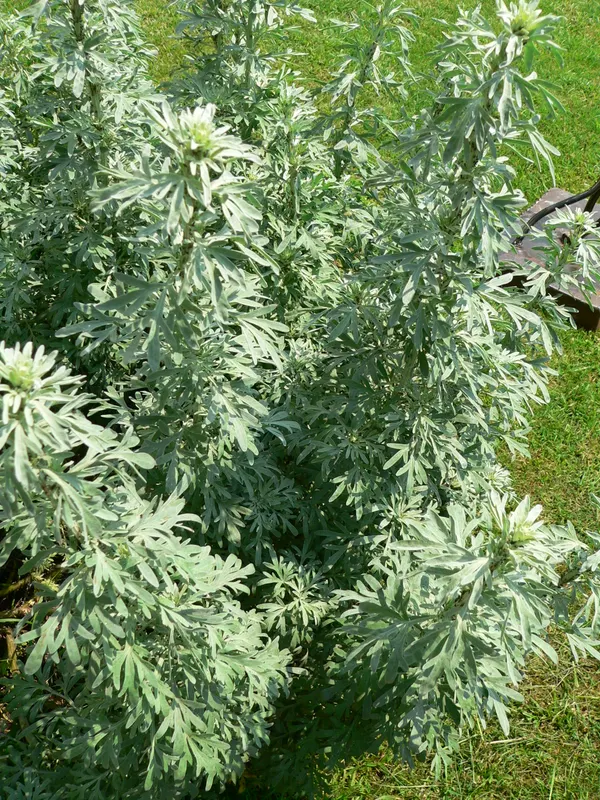
This plant carries serious safety risks. All information is for educational reference only.
Safety information
Toxicity: Thujone is neurotoxic/convulsant; folk emmenagogue/abortifacient. | SERIOUS in concentrated/excess form. Contains thujone (in the volatile oil); excess produces giddiness and attacks of epileptiform convulsions. Chronic high-dose use (historically via absinthe) associated with absinthism (convulsions, neurological harm). | Serious if misused — contains thujone (nerve stimulant; toxic in excess; historic concern with absinthe). | Serious in overdose — thujone (toxic monoterpene): high doses cause vomiting, severe diarrhea, urine retention, stupor, convulsions, CNS disturbances, paralysis, death at extreme doses. | Contains thujone, a neurotoxic/convulsant terpene. Prolonged or high-dose use can cause GI upset, restlessness, and in excess seizures/neurotoxicity. | Contains thujone, a GABA-antagonist neurotoxic terpene; high/prolonged doses cause neurotoxicity (restlessness, tremor, seizures, historical 'absinthism'). Essential oil hazardous and not for internal use.
Contraindications: Pregnancy-contraindicated. | None specified by source. Modern: avoid in pregnancy (emmenagogue/abortifacient potential), in epilepsy, and the concentrated oil generally. | Professional supervision; small doses only, max ~4–5 weeks; avoid in pregnancy. | Contraindicated in stomach hyperacidity and intestinal ulcers; avoid in pregnancy. | Pregnancy and breastfeeding (thujone - emmenagogue/abortifacient reputation); epilepsy/seizure disorders; alcohol use disorder (alcohol tinctures). | Pregnancy and breastfeeding (abortifacient/emmenagogue reputation); epilepsy/seizure disorders; children; porphyria; concurrent CNS-active drugs.
Interactions: None specified by source. | None specifically noted. | Thujone additive with other thujone-containing herbs (sage, tansy, thuja, rosemary). | May lower seizure threshold (oppose anticonvulsants); additive with other GABA-active/sedative agents. (Safety gate.) | May lower seizure threshold (oppose anticonvulsants); additive CNS effects with sedatives/alcohol; theoretical interaction with hepatically metabolised drugs; bitter/choleretic action relevant in biliary disease.
Pregnancy & breastfeeding: Pregnancy-contraindicated (emmenagogue/abortifacient). | Avoid (emmenagogue/abortifacient potential) (modern). | Avoid in pregnancy. | Avoid in pregnancy; very high tincture doses reported to induce abortion (abortifacient). | Contraindicated (thujone - abortifacient reputation). | Contraindicated (abortifacient/emmenagogue reputation).
Evidence level
Supported by clinical trials in humans.
Preparations
This plant carries serious safety risks. All information is for educational reference only.
other · leaf and flowering top
Part used: leaf and flowering top
Traditional use: Traditionally used as a bitter to stimulate digestion, against intestinal worms, and historically as an antidepressant.
How to prepare (traditional): Traditionally prepared as an infusion or tincture, but because of the toxic thujone in its essential oil this is a low-dose, short-term bitter; powdered herb is sometimes taken in pill form as an anthelmintic to avoid the very bitter taste. Dilute aqueous extracts contain only trace thujone.
Dosage note (descriptive only): professional use only - not provided
Reference only — not a dosage instruction
infusion · aerial parts
Part used: aerial parts
Traditional use: Described to stimulate appetite (intensely bitter; sipped in small doses).
How to prepare (traditional): Infusion made from the herb, taken in small doses.
Dosage note (descriptive only): professional use only — not provided
Reference only — not a dosage instruction
tincture · aerial parts
Part used: aerial parts
Traditional use: Described for chronic digestive infections and to strengthen weak digestion.
How to prepare (traditional): Tincture of the herb.
Dosage note (descriptive only): professional use only — not provided
Reference only — not a dosage instruction
Associated conditions
Nutritional notes
Not relevant; contains volatile oil (thujone, thujyl alcohol, cadinene, phellandrene, pinene), bitter glucoside absinthin, tannin, resin. | Not a food.
Healing traditions
Related plants
Sources (8)
- Grieve M., A Modern Herbal (1931) — Maud Grieve (1931)
- Chevallier A., Encyclopedia of Herbal Medicine (2016) — Andrew Chevallier (2016)
- Hoffmann D., Medical Herbalism (2003) — David Hoffmann (2003)
- ნუნუ ღლიღვაშვილი-მარგიანი, "მედეადან დღემდე" (Nunu Ghlighvashvili-margiani, "From Medea to the present day")
- Martkoplishvili & Kvavadze, Some popular medicinal plants ... Upper Palaeolithic in Western Georgia, J Ethnopharmacol 2015
- Bussmann et al., A comparative ethnobotany ... Republic of Georgia, J Ethnobiol Ethnomed 2016;12:43
- Mtsire Karabadini, Part II (Surmanidze, 1990) — Ramaz Surmanidze (1990)
- Karabadini (Khelaia ed., 2009) — Nani Khelaia (ed.) (2009)