
Safety information
Safety information
Toxicity: Safe at dietary doses. High FOS intake causes abdominal pain, bloating, flatulence, diarrhea; one published anaphylaxis case. 4-month subchronic rat study found no significant toxicity. (FOS partly hydrolyzes to fructose after harvest — cold storage recommended.)
Contraindications: IBS/FODMAP intolerance (high FOS); yacon/Asteraceae allergy; caution combining with glucose-lowering drugs (additive effect).
Interactions: Possible additive glucose-lowering effect with antidiabetic medications (monitor).
Evidence level
Supported by clinical trials in humans.
Preparations
dried root powder · root
Part used: root
leaf infusion (tea) for blood sugar · leaves
Part used: leaves
roots eaten raw, cooked, or as syrup/concentrate · root
Part used: root
Traditional use: sweet Andean staple; folk use of root and leaf tea for diabetes/blood-sugar control and digestion
Proposed mechanism: fructooligosaccharides (FOS/inulin-type) — prebiotic, glycemic-lowering, lipid-lowering, laxative
Associated conditions
Edibility
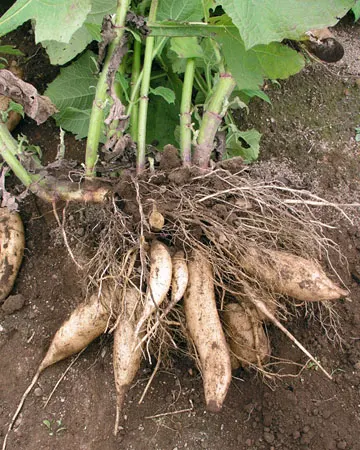
Edible parts: Tuberous root, raw or cooked (sweet, crisp; also juiced/syruped).
Toxic lookalike warning
Resembles sweet potato / Pachyrhizus (jicama). True jicama (Pachyrhizus erosus) has an edible root but highly TOXIC seeds and pods (rotenone) — never eat the seeds/pods of any 'jicama'-type plant; positively identify before eating any unfamiliar Andean tuber.
Nutritional notes
Low-calorie root: high water, FOS/inulin (soluble prebiotic fiber, low glycemic), low digestible sugar/starch; modest phenolics (chlorogenic acid).
Healing traditions
Related plants
Sources (2)
- Subchronic 4-month oral toxicity study, Food Chem Toxicol, 2005
- Nutrients (MDPI), 2016
Sourcing & resources
Affiliate links — we may earn a small commission at no extra cost to you.