
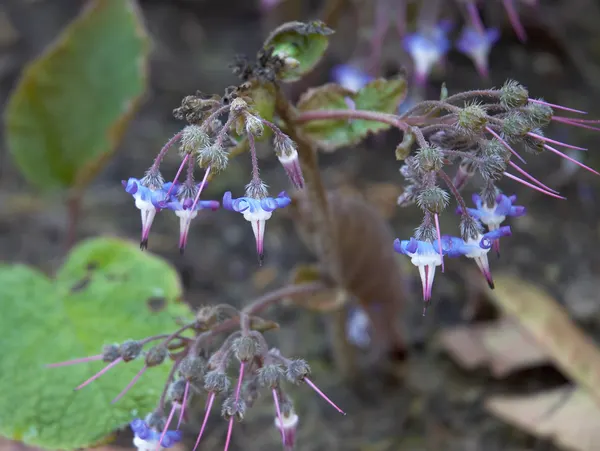
Abkhasian/Caucasian borage
Trachystemon orientalis
Other names: Mingrelian local greens names (Turkish 'kaldirik'), Abkhasian/Caucasian borage
Edible plantPhoto credit: Wouter Hagens
Safety information
Safety information
Toxicity: Cooked young leaves traditionally eaten and considered safe. Caution: Boraginaceae can contain hepatotoxic pyrrolizidine alkaloids in some species/parts — best eaten cooked, young, not habitually in large quantities; Trachystemon generally reported low in PAs but family caveat stands.
Contraindications: Pregnancy/liver disease — avoid large/habitual intake given possible family PA content.
Interactions: None well documented; theoretical additive hepatotoxicity with other PA sources.
Pregnancy & breastfeeding: Avoid large/habitual intake (possible family PA content).
Evidence level
Reported in folk medicine sources; not clinically validated. Folk and historical sources have not been validated by clinical research.
Preparations
folk medicinal · leaf
Part used: leaf
Traditional use: mild diuretic/depurative(Folk and historical sources have not been validated by clinical research.)
cooked · young leaf/stalk/shoot
Part used: young leaf/stalk/shoot
Traditional use: boiled/sautéed greens, in fillings and egg dishes (like spinach)(Folk and historical sources have not been validated by clinical research.)
Dosage note (descriptive only): young/cooked only
Associated conditions
Edibility
Edible parts: young leaves/stalks cooked only
Toxic lookalike warning
CRITICAL: large basal Boraginaceae leaves can resemble other hairy-leaved rosette plants including deadly ones (e.g. foxglove rosettes, Digitalis, are lethal; and Symphytum/comfrey is high-PA); confirm Trachystemon orientalis (blue borage-type flowers with reflexed petals, bristly leaves); never gather unknown large hairy rosette leaves.
Nutritional notes
Leafy-green minerals (iron, calcium) and vitamins; valued seasonal vegetable.
Healing traditions
Related plants
Sources (2)
- Bussmann et al., A comparative ethnobotany ... Republic of Georgia, J Ethnobiol Ethnomed 2016;12:43
- Bussmann et al., Unity in diversity — food plants of Sakartvelo, 2021
Sourcing & resources
Affiliate links — we may earn a small commission at no extra cost to you.