
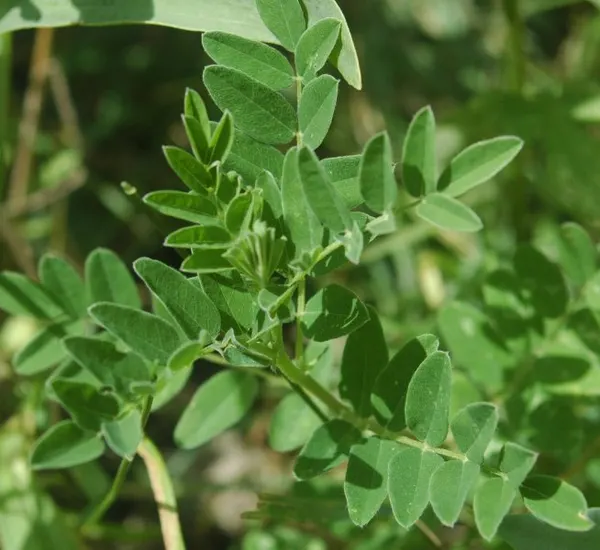
Astragalus (Huang Qi)
Astragalus membranaceus
Other names: Astragalus (Huang Qi), Astragalus
Edible plantPhoto credit: Doronenko (Wikimedia Commons)
Safety information
Safety information
Toxicity: None known. | None known reported.
Contraindications: Avoid during acute infection/fever and with active skin disorders. | None specifically named.
Interactions: None specifically noted. | Potentiates interleukin-2 and acyclovir; may be incompatible with immunosuppressive drugs (cyclosporine, azathioprine, methotrexate).
Evidence level
Supported by clinical trials in humans.
Preparations
decoction · root
Part used: root
Traditional use: For anemia, and for cold and numbness (with cinnamon).
How to prepare (traditional): For anemia, make a decoction with 12 g astragalus root and 12 g Chinese angelica; for cold and numbness, decoct 20 g root with 5 g cinnamon.
Dosage note (descriptive only): Anemia decoction: take 1 1/4 cups (300 ml) daily. Cold/numbness decoction: drink 3/4 cup (150 ml) twice a day.
other · root
Part used: root
Traditional use: As a stimulant energy tonic.
How to prepare (traditional): Dry-fried root, alone or with honey, eaten with meals.
Dosage note (descriptive only): As a stimulant tonic, fry 5–10 g root by itself or with 1 tsp honey each day and eat with meals.
tincture · root
Part used: root
Traditional use: For night sweats and excessive sweating.
How to prepare (traditional): Tincture of the root.
Dosage note (descriptive only): For night sweats, take 1 tsp with water 1–2 times daily.
Associated conditions
Edibility
Edible parts: root commonly simmered in soups as a food-tonic in China | root used in food (soups) traditionally, then removed
Nutritional notes
Immune-supportive food-tonic; polysaccharides. | Polysaccharide-rich tonic.
Healing traditions
Related plants
Sources (2)
- Chevallier A., Encyclopedia of Herbal Medicine (2016) — Andrew Chevallier (2016)
- Hoffmann D., Medical Herbalism (2003) — David Hoffmann (2003)
Sourcing & resources
Affiliate links — we may earn a small commission at no extra cost to you.