
Safety information
Safety information
Toxicity: Culinary amounts safe; concentrated thymol/essential oil is irritant and toxic in overdose (GI, hepatotoxic at high doses).
Contraindications: Pregnancy in medicinal/high doses (uterine-stimulant reputation — culinary use ok, medicinal caution); peptic ulcer (concentrated oil irritant); children with concentrated oil.
Interactions: Possible additive with antiplatelet/anticoagulant (mild) and with hepatically cleared drugs at high oil doses; antidiabetics (additive).
Pregnancy & breastfeeding: Culinary use ok; medicinal/high doses caution (uterine-stimulant reputation).
Evidence level
Supported by clinical trials in humans.
Preparations
decoction · fruit
Part used: fruit
distillate (Ajwain ka phool / thymol water) · fruit
Part used: fruit
culinary spice · fruit
Part used: fruit
Dosage note (descriptive only): safe in food amounts
powder · fruit
Part used: fruit
Traditional use: indigestion, flatulence, colic, cough, worms
Proposed mechanism: thymol (dominant essential-oil phenol), carvacrol, p-cymene — antimicrobial, antifungal, antispasmodic, carminative, antioxidant
Associated conditions
Edibility
Edible parts: The seed is a common culinary spice (safe in food amounts). Concentrated oil is not a food.
Toxic lookalike warning
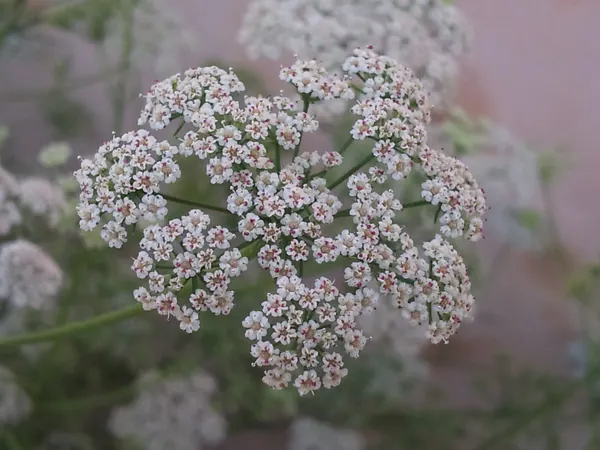
Umbellifer (Apiaceae) 'seeds' resemble other Apiaceae, a family containing deadly species (hemlock); buy authenticated spice, never forage unknown umbellifer seeds.
Nutritional notes
Spice; source of fiber, minerals and thymol-rich oil.
Healing traditions
Related plants
Sources (3)
- Halder 2025, Sci Rep (PMID 41083705)
- Maaroufi 2021, antifungal study (PMID 34656507)
- Khan 2020, anticandidal study (PMID 32233667)
Sourcing & resources
Affiliate links — we may earn a small commission at no extra cost to you.