
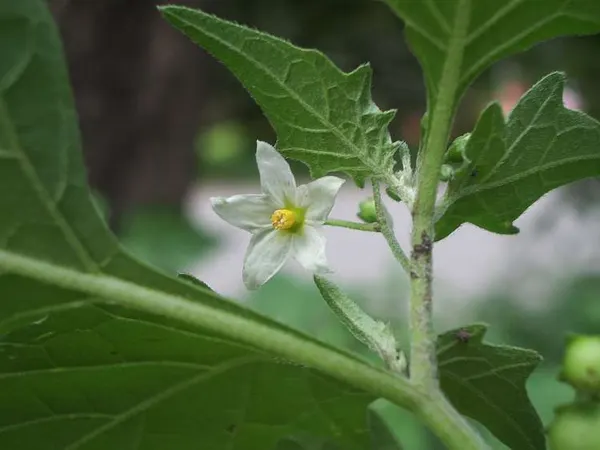
Safety information
Safety information
Toxicity: Caution — solanine-type glycoalkaloids. Unripe (green) berries and high doses are toxic (GI, neurological); ripe black berries and properly cooked leaves are lower-risk and eaten traditionally, but identity and ripeness are critical.
Contraindications: Children and pregnancy (glycoalkaloid risk — caution); avoid green/unripe berries entirely.
Interactions: Theoretical additive with cardiac/cholinergic drugs at toxic doses; caution combining with other Solanaceae or sedatives.
Pregnancy & breastfeeding: Pregnancy: glycoalkaloid risk — caution.
Evidence level
Supported by laboratory or animal studies; not yet confirmed in humans.
Preparations
fresh juice · whole plant
Part used: whole plant
cooked leaf (after proper preparation) · leaf
Part used: leaf
decoction · whole plant
Part used: whole plant
Traditional use: liver disorders, edema, skin disease, mild diuretic/anti-inflammatory
Proposed mechanism: glycoalkaloids (solanine, solasonine, solamargine), glycoproteins, polysaccharides — hepatoprotective, antioxidant, antiproliferative; same glycoalkaloids are the toxic principle
Associated conditions
Edibility
Edible parts: Conditionally — ripe black berries and cooked young leaves are eaten as food in many cultures, BUT unripe green berries are poisonous.
Toxic lookalike warning
Black nightshade dangerously confused with deadly nightshade (Atropa belladonna) and other toxic Solanum; never eat unless positively identified and fully ripe/cooked.
Nutritional notes
Cooked leaves are a traditional leafy green (vitamins/minerals); berries minor — value gated by safety.
Healing traditions
Related plants
Sources (3)
- Solanaceae phytochemical review 2024 (PMID 38475570)
- Lin 2008, J Ethnopharmacol (CCl4 hepatoprotection) (PMID 18045581)
- Jain 2011, therapeutic-properties review (PMID 21438649)
Sourcing & resources
Affiliate links — we may earn a small commission at no extra cost to you.