
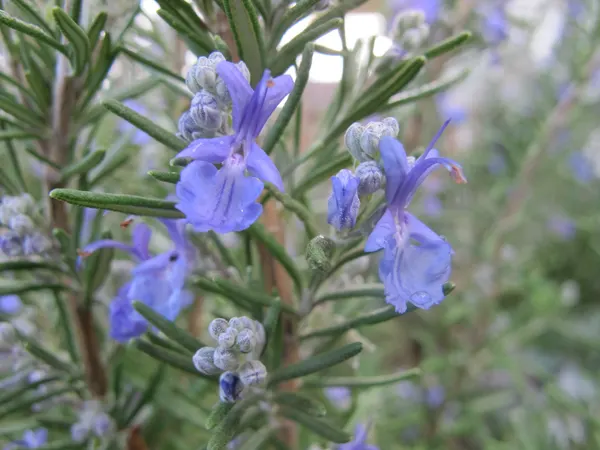
Rosemary
Salvia rosmarinus
Other names: Rosemary
Edible plantPhoto credit: Margalob
Safety information
Safety information
Toxicity: Leaf preparations generally well tolerated. Concentrated essential oil can be irritant/neurotoxic at high doses (camphor/cineole content) - not for undiluted internal use; very large amounts have caused seizures. | Culinary amounts safe. Concentrated essential oil should not be ingested in quantity (camphor/cineol-rich oils risky in high doses). | Mild (essential oil not for unsupervised internal use). | Culinary amounts safe. Essential oil/high doses can irritate; large medicinal doses cautioned.
Contraindications: Bile-duct obstruction, gallstones, severe liver disease (choleretic effect). Avoid medicinal/high doses and the essential oil in pregnancy (traditional emmenagogue/uterine concern). EMA: mostly adults. | None specified by source. Modern: large medicinal/oil doses best avoided in pregnancy. | Internal essential-oil use professional-only. | Pregnancy (avoid medicinal/oil amounts); epilepsy caution for high-dose oil (camphor).
Interactions: Theoretical effects on iron absorption (polyphenols), and on anticoagulants and antidiabetic/antihypertensive drugs at high intake - consult provider. | None specified by source. | None specifically noted. | Theoretical at high/oil doses; none at culinary doses.
Pregnancy & breastfeeding: Avoid medicinal/high doses and the essential oil in pregnancy (traditional emmenagogue/uterine concern). | Large medicinal/oil doses best avoided (modern). | Pregnancy (avoid medicinal/oil amounts).
Evidence level
Supported by clinical trials in humans.
Preparations
infusion · leaves
Part used: leaves
Traditional use: circulatory and nerve stimulant — memory/concentration, head circulation; raises low BP; restorative after stress/illness; uplifting; headaches/migraine
Proposed mechanism: diterpenes stimulate nerve growth factor; anti-inflammatory and blood-vessel-protective
tincture · leaves
Part used: leaves
Traditional use: circulatory/nerve tonic
infusion / essential oil (topical/aroma) · leaf
Part used: leaf
Traditional use: minor muscle/joint and circulatory complaints (topical)
infusion (tea) / dry or liquid extract / topical or bath additive / essential oil (aromatherapy, external) / culinary herb · leaf
Part used: leaf
Traditional use: minor dyspeptic/digestive complaints (stomachic/choleretic); topically/in baths for minor joint/muscle pain and minor peripheral circulatory complaints; folk use for memory/concentration
Proposed mechanism: rosmarinic and carnosic acids antioxidant/anti-inflammatory; cineole (1,8-cineole) and volatiles spasmolytic/choleretic with proposed cholinergic/cognitive effects (AChE inhibition in vitro) - preclinical
Dosage note (descriptive only): traditional infusion ~2-4 g leaf per cup; topical/bath preparations per product (EMA); descriptive only
essential oil (distilled), infusion/Rosemary Tea, Rosemary Wine, conserve, spirit of rosemary, hair lotions and liniments · herb/oil
Part used: herb/oil
Traditional use: strengthens memory (reputed); hair lotions for hair growth/dandruff; tea for headache, colds, colic, nervous depression; wine cordial for weak heart; oil rubefacient for rheumatism
Proposed mechanism: tonic, astringent, diaphoretic, stimulant; some modern interest in hair and cognition but not conclusively clinical
Dosage note (descriptive only): concentrated oil not for ingestion in quantity
diluted essential oil · leaves
Part used: leaves
Traditional use: topical for hair growth and rheumatic muscle pain
Dosage note (descriptive only): internal essential-oil use professional-only
culinary herb (fresh/dried) · leaf
Part used: leaf
Traditional use: digestive/carminative; culinary antioxidant
Proposed mechanism: rosmarinic acid, carnosol, carnosic acid
Dosage note (descriptive only): culinary amounts safe; oil/high doses cautioned
Associated conditions
Edibility
Edible parts: leaves as a culinary herb (fresh/dried), cooked. Culinary amounts safe; concern is concentrated/high-dose medicinal use and the oil. | leaves as culinary herb (cooked, in stuffings/sauces) and as tea | common culinary herb (leaves) | Leaf as culinary herb.
Toxic lookalike warning
A distinctively aromatic shrub; never consume needle-leaved evergreens (e.g., yew, highly toxic) mistaken for rosemary - verify by the unmistakable rosemary scent. | Rosemary's needle leaves distinctive; main caution is not confusing rosemary essential oil or wild plants with unrelated camphor-rich toxic plants — culinary leaf is unmistakable.
Nutritional notes
Culinary herb; negligible quantities (antioxidant polyphenols). | Aromatic herb; volatile oil (borneol, bornyl acetate, cineol, pinene), tannic acid, resin, bitter principle. | Antioxidant culinary herb (rosmarinic/carnosic acid). | Rosmarinic acid, carnosol, carnosic acid (antioxidant polyphenols/diterpenes); functional culinary antioxidant.
Healing traditions
Related plants
Sources (6)
- Grieve M., A Modern Herbal (1931) — Maud Grieve (1931)
- Chevallier A., Encyclopedia of Herbal Medicine (2016) — Andrew Chevallier (2016)
- Priya 2025 rosmarinic acid review (PMID 40134762, DOI 10.2147/ndt.s501597)
- EMA/HMPC Rosmarini folium / aetheroleum monograph & public summary
- EMA/HMPC Rosmarini folium
- food-phytochemistry literature
Sourcing & resources
Affiliate links — we may earn a small commission at no extra cost to you.