
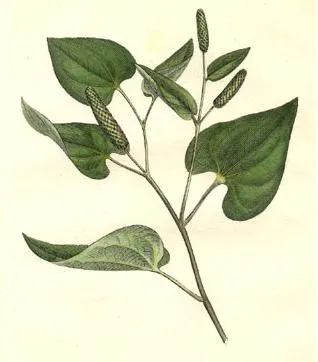
Pippali (long pepper)
Piper longum
Other names: Pippali (पिप्पली), Indian long pepper, Pippali (long pepper)
Edible plantSafety information
Safety information
Toxicity: Low as a spice; high-dose piperine can irritate GI mucosa and significantly alters drug metabolism (the main hazard).
Contraindications: Pregnancy (high medicinal doses — possible effects; culinary amounts acceptable); on narrow-therapeutic-index medications (drug-level changes).
Interactions: Important — piperine inhibits CYP3A4/P-glycoprotein and increases blood levels of many drugs (phenytoin, rifampicin, propranolol, midazolam) and of curcumin. Can raise toxicity risk of co-administered drugs.
Pregnancy & breastfeeding: High medicinal doses possible effects; culinary amounts considered acceptable.
Evidence level
Supported by clinical trials in humans.
Preparations
standardized piperine/powder · fruit
Part used: fruit
Traditional use: respiratory/digestive stimulant, 'yogavahi' bioavailability enhancer, rejuvenative
Proposed mechanism: Piperine inhibits CYP3A4, CYP2C and P-glycoprotein and slows glucuronidation, raising bioavailability of co-administered drugs and nutrients ('yogavahi'); thermogenic and GI-stimulant
Dosage note (descriptive only): Bioavailability studies used piperine in low tens of mg (e.g., ~20 mg co-dosed with curcumin); clinically significant drug interactions
Associated conditions
Edibility
Edible parts: Fruit used as a culinary spice (cooked).
Toxic lookalike warning
Dried long-pepper catkins resemble other Piper/pepper spices; buy identified Pippali; do not substitute unknown dried spikes.
Nutritional notes
Spice; bioactive piperine.
Healing traditions
Related plants
Sources (4)
- Zhang 2021, Food Funct (PMID 34528635)
- Srinivasan 2007, Crit Rev Food Sci Nutr (PMID 17987447)
- Quijia 2021, Acta Pharm (PMID 33151173)
- LactMed: Black Pepper, NICHD (PMID 35349239)
Sourcing & resources
Affiliate links — we may earn a small commission at no extra cost to you.