
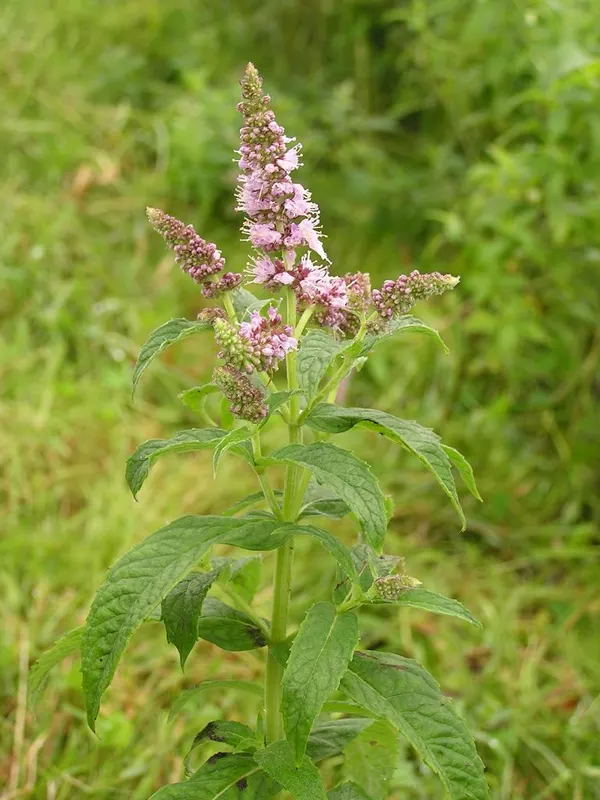
Wild mint / pennyroyal group
Mentha longifolia
Other names: Wild mint / pennyroyal group
Edible plantPhoto credit: Michael Becker
This plant carries serious safety risks. All information is for educational reference only.
Safety information
Toxicity: Common mints (M. longifolia, spearmint, peppermint): low toxicity as food/tea. Pennyroyal (Mentha pulegium) essential oil rich in pulegone (and metabolite menthofuran), hepatotoxic and abortifacient — concentrated oil dangerous, has caused human fatalities and abortions. Culinary leaf amounts of ombalo traditional, but oil/strong extracts not safe; regulators set strict pulegone limits in food.
Contraindications: Pennyroyal: pregnancy (abortifacient) — avoid oil/strong preparations entirely; liver disease. Mints generally: reflux/GERD may worsen with strong mint; infants (avoid menthol near the face).
Interactions: Mint may relax the lower oesophageal sphincter (reflux) and inhibit some CYPs at high dose; pulegone/menthofuran bioactivation stresses hepatic glutathione (additive hepatotoxicity risk with paracetamol/other hepatotoxins).
Pregnancy & breastfeeding: Pennyroyal (M. pulegium) contraindicated — abortifacient.
Evidence level
Supported by laboratory or animal studies; not yet confirmed in humans.
Preparations
This plant carries serious safety risks. All information is for educational reference only.
infusion · leaf/top
Part used: leaf/top
Traditional use: carminative/digestive tea for upset stomach and colds(Folk and historical sources have not been validated by clinical research.)
cooked (seasoning) · leaf
Part used: leaf
Traditional use: ombalo classic Georgian flavoring (lobio bean dishes, herb mixes)(Folk and historical sources have not been validated by clinical research.)
Dosage note (descriptive only): small leaf amounts only (M. pulegium)
Reference only — not a dosage instruction
Associated conditions
Edibility
Edible parts: mint leaves raw/cooked; ombalo as a traditional seasoning in small culinary leaf amounts only
Toxic lookalike warning
Square-stemmed aromatic mints usually safe to identify by smell, but young non-aromatic lookalikes exist; confirm the strong mint aroma and square stem; do not substitute or concentrate ombalo into oil.
Nutritional notes
Aromatic herb; minor nutritional contribution (some vitamin A, manganese).
Healing traditions
Related plants
Sources (3)
- Bussmann et al., A comparative ethnobotany ... Republic of Georgia, J Ethnobiol Ethnomed 2016;12:43
- Bussmann et al., Unity in diversity — food plants of Sakartvelo, 2021
- Voigt, Franke & Lachenmeier, Risk Assessment of Pulegone in Foods, Foods 2024;13:2906 (PMID 39335834)