
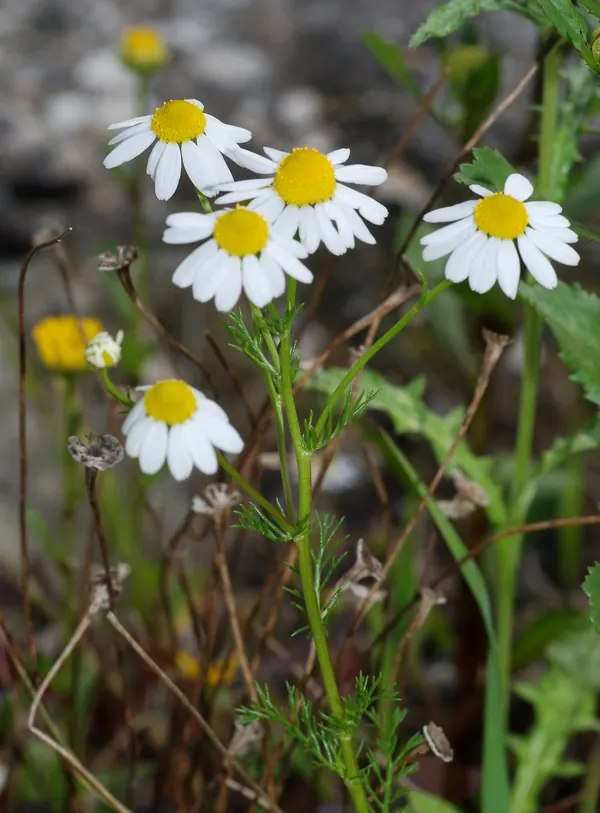
Safety information
Safety information
Toxicity: Generally mild. Allergic reactions, sometimes severe, especially on mucosal contact with liquid preparations (frequency not established). | Mild — fresh plant can cause dermatitis (Asteraceae). | Low; rare allergy in Asteraceae-sensitive people. | Mild. Allergic reactions (occasionally severe), especially with liquid preparations on mucosa.
Contraindications: Hypersensitivity to Asteraceae. Avoid full chamomile baths in severe cardiac/circulatory disease, open wounds, extensive skin damage, high fever, severe infection. | Do not use the essential oil externally in pregnancy; use oil internally only under supervision; caution with blood-thinning medication. | Asteraceae allergy; theoretical caution in pregnancy at high medicinal doses. | Allergy to chamomile or other Asteraceae/Compositae. No full baths in severe cardiac/circulatory disease, open/extensive wounds, acute skin disease, high fever, or severe infection. Generally adults/adolescents >12.
Interactions: Not detailed in public summary; theoretical additive effects with sedatives and (via coumarin content) anticoagulants noted elsewhere - consult provider. | Possible additive effect with anticoagulants. | Mild additive sedation; theoretical additive with anticoagulants (coumarins). (Safety gate.) | None established in EMA public summary. Theoretical additive sedation and additive anticoagulant effect (coumarin content) — not verified.
Pregnancy & breastfeeding: Not specifically addressed in public summary; LactMed record exists. | Do not use essential oil externally in pregnancy. | Theoretical caution at high medicinal doses.
Evidence level
Supported by laboratory or animal studies; not yet confirmed in humans.
Preparations
infusion (tea) · flower heads
Part used: flower heads
Traditional use: soothes digestive upset (acidity, gas, colic, gastritis); calming for tension and menstrual cramps; hay fever and asthma
Proposed mechanism: spiroether strong antispasmodic; chamazulene anti-allergenic/anti-inflammatory
tincture · flower heads
Part used: flower heads
Traditional use: digestive, calming
cream/ointment · flower heads
Part used: flower heads
Traditional use: sore/itchy skin
infusion (tea) · flower head
Part used: flower head
Traditional use: colds, GI complaints (gastritis mixtures), mild sedative, constipation, rectal/gum inflammation, expectorant softener(Folk and historical sources have not been validated by clinical research.)
gargle · flower head
Part used: flower head
Traditional use: sore throat (with linden)(Folk and historical sources have not been validated by clinical research.)
pillow filling · flower head
Part used: flower head
Traditional use: mild sedative for restless/teething infants (with hops)(Folk and historical sources have not been validated by clinical research.)
ointment · flower heads
Part used: flower heads
Traditional use: skin/mouth irritation
infusion / liquid or dry extract / steam inhalation / mouth rinse / topical / bath additive · flower heads
Part used: flower heads
Traditional use: minor GI complaints, common-cold symptoms, minor mouth/throat ulcers, skin irritation and minor wounds/sunburn
Proposed mechanism: apigenin (benzodiazepine/GABA-A affinity) and essential-oil components alpha-bisabolol and chamazulene proposed anxiolytic, antispasmodic, anti-inflammatory - preclinical
Dosage note (descriptive only): traditional infusion ~3 g flower heads per cup several times daily, or equivalent extracts (EMA); descriptive only
essential oil · flower heads
Part used: flower heads
Traditional use: topical/aromatherapy
Dosage note (descriptive only): internal use only under supervision; not externally in pregnancy
infusion · flower heads
Part used: flower heads
Traditional use: digestive upset, colds; gargle/wash for inflamed mouth/throat/skin/minor wounds
Proposed mechanism: Essential-oil sesquiterpenes (α-bisabolol, chamazulene) anti-inflammatory/spasmolytic; flavone apigenin (mild benzodiazepine-receptor affinity, calming)
Dosage note (descriptive only): EMA: flower-head infusion for oral/GI use, steam inhalation, rinse/gargle or ointment; per labelled product
Associated conditions
Edibility
Edible parts: Flowers used as tea (culinary/beverage), not as bulk food. | Flowers used as a tea/flavouring; not a food crop | Flowers as tea only (not a food). | Yes (as tea/flavoring), not a leafy vegetable.
Toxic lookalike warning
Related 'false/stinking chamomile' species exist — use cultivated pharmacy-grade flowers.
Nutritional notes
Beverage use; negligible nutrition. | None notable. | Not a nutritional food; bioactives are essential oil (α-bisabolol, chamazulene) and flavonoids (apigenin).
Healing traditions
Related plants
Sources (6)
- Chevallier A., Encyclopedia of Herbal Medicine (2016) — Andrew Chevallier (2016)
- ნუნუ ღლიღვაშვილი-მარგიანი, "მედეადან დღემდე" (Nunu Ghlighvashvili-margiani, "From Medea to the present day")
- EMA/HMPC Matricariae flos monograph & public summary
- NIH LactMed record for German chamomile
- Matricariae flos — HMPC summary, EMA/HMPC, 2016
- EU herbal monograph on Matricaria recutita L., flos, EMA/HMPC, 2016
Sourcing & resources
Affiliate links — we may earn a small commission at no extra cost to you.