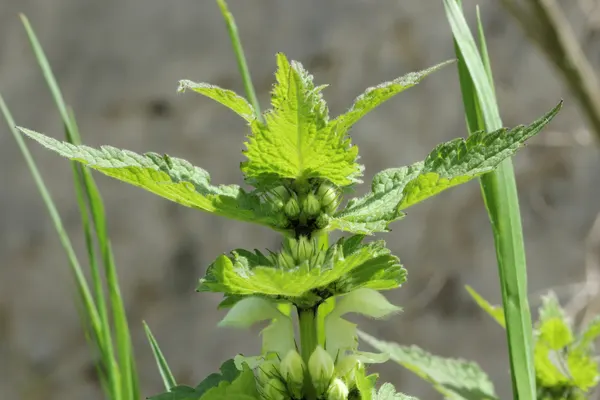
White Dead-Nettle
Lamium album
Other names: White Dead-Nettle
Edible plantPhoto credit: Coyau (Wikimedia Commons)
Safety information
Safety information
Toxicity: None known; not a stinging plant despite the name.
Contraindications: None specified by source.
Interactions: None specified by source.
Evidence level
Reported in folk medicine sources; not clinically validated. Folk and historical sources have not been validated by clinical research.
Preparations
decoction, infusion/tea (with honey), tincture of fresh herb, bruised leaves applied externally · herb/flowers
Part used: herb/flowers
Traditional use: check haemorrhage (spitting blood, dysentery, female complaints); staunch wounds, bruises, burns; promote perspiration; folk blood purifier for rashes/eczema(Folk and historical sources have not been validated by clinical research.)
Proposed mechanism: astringent; not clinically established
Associated conditions
Edibility
Edible parts: flowers baked with sugar; young plant eaten as a pot-herb in Sweden (Linnaeus)
Toxic lookalike warning
Chiefly mistaken for the stinging nettle before flowering - distinguish by the square HOLLOW stem and absence of sting.
Nutritional notes
Minor; occasional pot-herb.
Healing traditions
Related plants
Sources (1)
- Grieve M., A Modern Herbal (1931) — Maud Grieve (1931)
Sourcing & resources
Affiliate links — we may earn a small commission at no extra cost to you.