
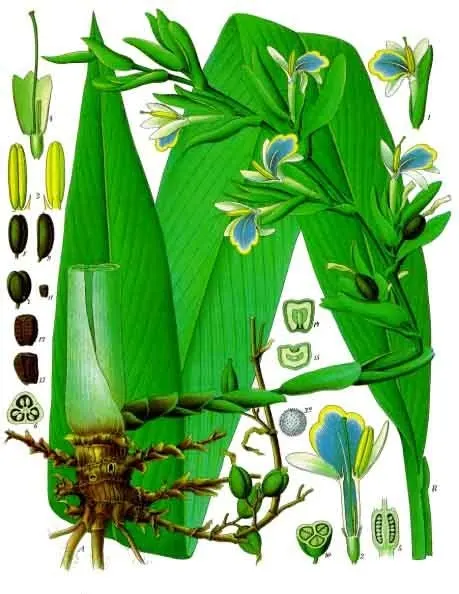
Cardamom
Elettaria cardamomum
Other names: Cardamom
Edible plantPhoto credit: Franz Eugen Köhler, Köhler's Medizinal-Pflanzen
Safety information
Safety information
Toxicity: Mild (essential oil not for internal use).
Contraindications: None notable.
Interactions: None specifically noted.
Evidence level
Supported by clinical trials in humans.
Preparations
infusion · seed
Part used: seed
Traditional use: Traditionally taken for indigestion and digestive complaints.
How to prepare (traditional): Infusion of the crushed seeds; described as a pleasant drink. Seeds are best crushed with a mortar and pestle just before use.
Dosage note (descriptive only): For indigestion, the book suggests drinking about 3/4 cup (150 ml) after meals.
oil · seed
Part used: seed
Traditional use: Traditionally massaged onto the abdomen for digestive pain.
How to prepare (traditional): Essential oil diluted in carrier oil and rubbed into the abdomen.
Dosage note (descriptive only): For digestive pain, the book suggests diluting 10 drops with 4 tsp carrier oil.
tincture · seed
Part used: seed
Traditional use: Traditionally used to improve appetite.
How to prepare (traditional): Tincture, combined with gentian tincture to improve appetite.
Dosage note (descriptive only): For poor appetite, the book suggests combining 5 drops cardamom with 15 drops gentian tincture, taken three times a day.
Associated conditions
Edibility
Edible parts: culinary spice (seeds/pods)
Nutritional notes
Spice.
Healing traditions
Related plants
Sources (1)
- Chevallier A., Encyclopedia of Herbal Medicine (2016) — Andrew Chevallier (2016)
Sourcing & resources
Affiliate links — we may earn a small commission at no extra cost to you.