
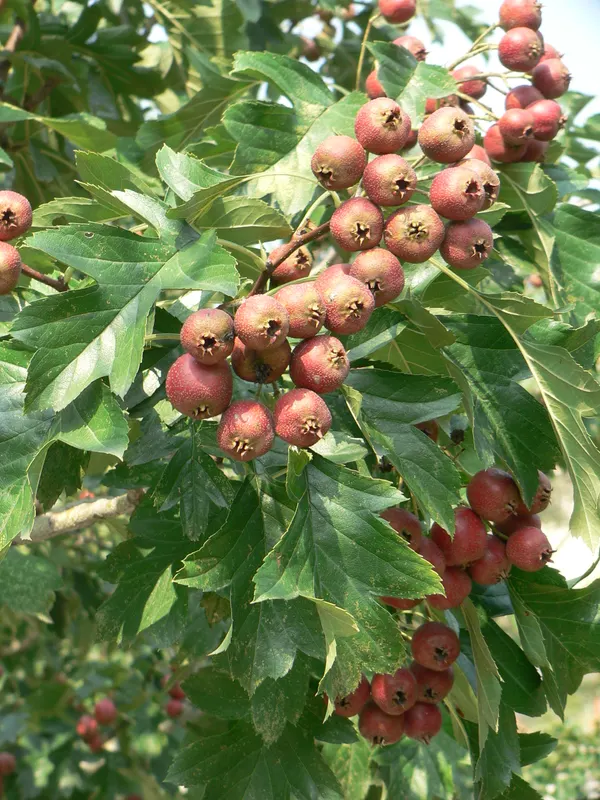
Shan zha / Chinese hawthorn
Crataegus pinnatifida
Other names: 山楂 shānzhā, Shan zha / Chinese hawthorn
Edible plantPhoto credit: Yongxinge (Wikimedia Commons)
Safety information
Safety information
Toxicity: Low for the food fruit; high acidity may aggravate reflux/gastric irritation. Generally a safe food.
Contraindications: Caution with cardiovascular drugs; pregnancy at concentrated medicinal doses not well characterized; gastric ulcer/reflux caution (acidity).
Interactions: Possible additive effects with cardiovascular drugs (antihypertensives, digoxin, nitrates) - caution and professional advice for medicinal extracts.
Pregnancy & breastfeeding: Concentrated medicinal doses not well characterized.
Evidence level
Supported by clinical trials in humans.
Preparations
decoction · fruit
Part used: fruit
Traditional use: digestive that resolves food stagnation (meat/fatty foods), moves qi, disperses blood stasis; lipid/cardiovascular interest
Proposed mechanism: Crataegus flavonoids, oligomeric procyanidins
edible · fruit
Part used: fruit
Traditional use: candied tanghulu, haw flakes/leather, jam(Folk and historical sources have not been validated by clinical research.)
powder/extract · fruit
Part used: fruit
Associated conditions
Edibility
Edible parts: Tart red fruit is a popular snack (candied tanghulu skewers, haw flakes/leather, jam).
Toxic lookalike warning
Hawthorn fruit flesh is edible but the seeds/kernels (like other Rosaceae pips) contain cyanogenic compounds - do not crush/eat the seeds; identify Crataegus correctly and avoid confusion with inedible red-berried shrubs.
Nutritional notes
Functional fruit; vitamin C, procyanidins/flavonoids, pectin (fiber); organic acids.
Healing traditions
Related plants
Sources (2)
- Crataegus pinnatifida (Wikipedia), English, accessed 2026, https://en.wikipedia.org/wiki/Crataegus_pinnatifida
- Hawthorn (NCCIH/NIH), English, https://www.nccih.nih.gov/health/hawthorn
Sourcing & resources
Affiliate links — we may earn a small commission at no extra cost to you.