
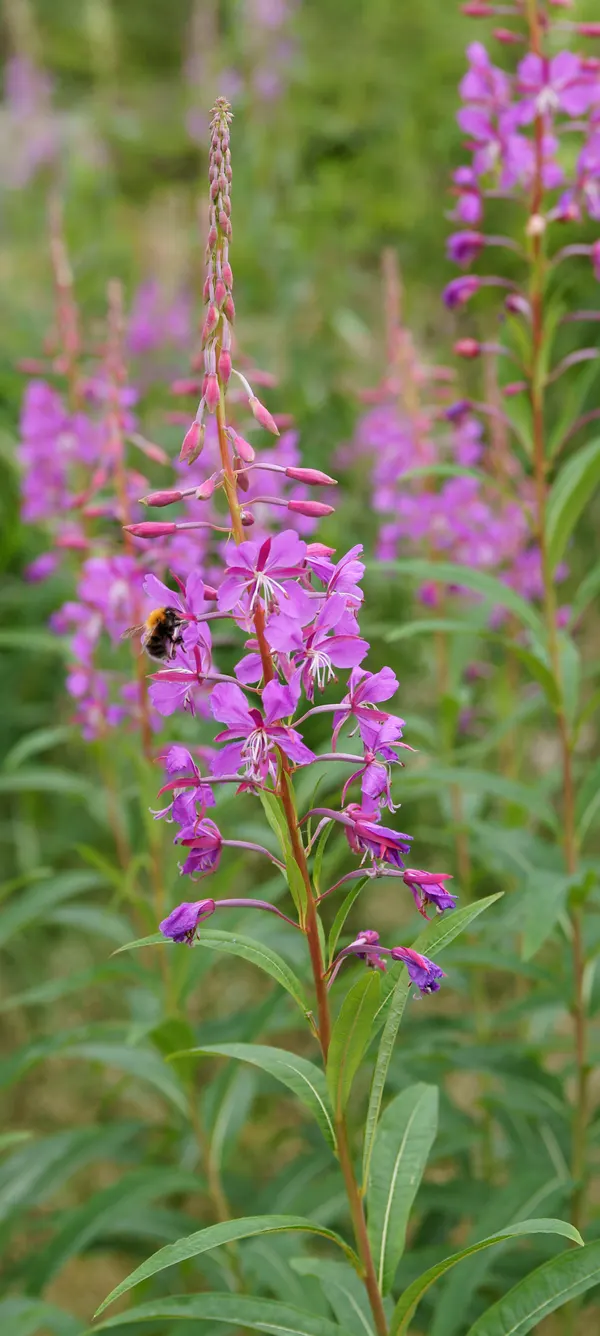
Ivan-chai / Fireweed (rosebay willowherb)
Chamerion angustifolium
Edible plantPhoto credit: kallerna
Safety information
Safety information
Toxicity: Mild. Generally well tolerated as a beverage; large amounts of tannin-rich tea may cause GI upset; pyrrolizidine alkaloids not a characteristic concern for Chamerion, but source purity matters.
Contraindications: Pregnancy/lactation — beverage use traditional but medicinal-strength use unstudied (caution); no robust data for therapeutic prostate dosing.
Interactions: None well-characterised; tannin-absorption caution at high intake.
Pregnancy & breastfeeding: Medicinal-strength use unstudied in pregnancy/lactation — caution.
Evidence level
Supported by laboratory or animal studies; not yet confirmed in humans.
Preparations
infusion · leaves
Part used: leaves
fermented-leaf tea (Koporye tea) · leaves
Part used: leaves
Traditional use: daily beverage; folk for 'stomach', sleep, men's prostate/urinary complaints; calming/anti-inflammatory folk tea
Proposed mechanism: macrocyclic ellagitannin oenothein B, flavonoids, polyphenols — anti-inflammatory, antioxidant, antiproliferative, 5alpha-reductase/anti-BPH (fermentation alters polyphenol profile)
young shoots edible-cooked · young shoots
Part used: young shoots
Traditional use: asparagus-like(Folk and historical sources have not been validated by clinical research.)
Associated conditions
Edibility
Edible parts: Young spring shoots cooked (asparagus-like), young leaves, and the fermented leaf as tea; flowers edible.
Toxic lookalike warning
Confirm the tall pink/magenta flower spike and willow-like leaves of Chamerion angustifolium; do not confuse young shoots with unrelated emerging plants.
Nutritional notes
Vitamin C, manganese, polyphenols; established functional/herbal beverage.
Healing traditions
Related plants
Sources (2)
- Uogintaite et al. 2025, Medicina (PMC12654776)
- Lasinskas et al. 2026, Plants (PMC13075012)
Sourcing & resources
Affiliate links — we may earn a small commission at no extra cost to you.