
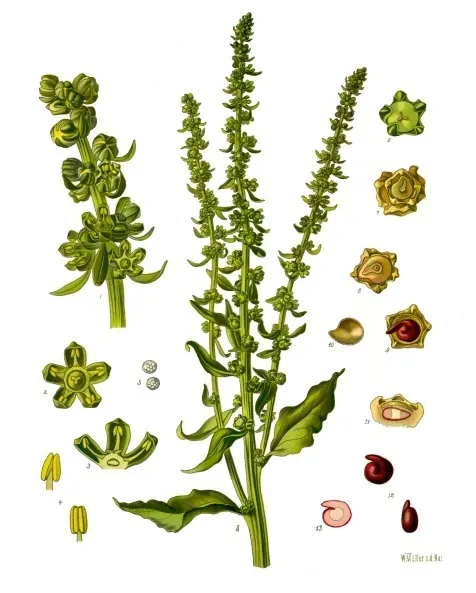
Sea beet
Beta vulgaris
Other names: Sea beet
Edible plantPhoto credit: Walther Otto Müller, Köhler's Medizinal-Pflanzen
Safety information
Safety information
Toxicity: Contains oxalates (like chard/spinach) and accumulates nitrate; cook and moderate. Coastal plants may bioaccumulate environmental contaminants depending on site.
Contraindications: Calcium-oxalate stone history.
Interactions: Dietary nitrate may add to nitrate-based vasodilation (minor).
Evidence level
Reported in folk medicine sources; not clinically validated. Folk and historical sources have not been validated by clinical research.
Preparations
cooked · leaf
Part used: leaf
Traditional use: like chard/spinach(Folk and historical sources have not been validated by clinical research.)
Proposed mechanism: cooking reduces oxalate/nitrate
Edibility
Edible parts: Leaves cooked.
Toxic lookalike warning
Glossy sea-beet leaves on shingle/saltmarsh confused with sea purslane (edible) but should not be confused with coastal hemlock water-dropwort (Oenanthe crocata) foliage near brackish ditches — among the most lethal British plants. Confirm beet's thick, glossy, often red-veined undivided leaves vs. the finely divided carrot-like foliage of Oenanthe.
Nutritional notes
Vitamin A, vitamin C, vitamin K, iron, magnesium, folate; nutrient profile of chard. Functional leafy green.
Healing traditions
Related plants
Sources (2)
- Food-composition data for Beta vulgaris leaves (chard/sea beet)
- coastal foraging references
Sourcing & resources
Affiliate links — we may earn a small commission at no extra cost to you.