
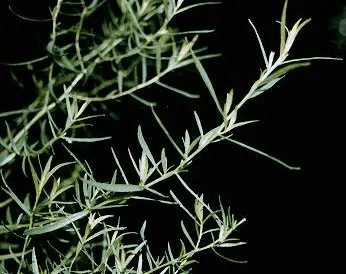
Tarragon
Artemisia dracunculus
Other names: Tarragon
Edible plantPhoto credit: Ies (Wikimedia Commons)
Safety information
Safety information
Toxicity: Low as a culinary herb. Essential oil contains estragole (methylchavicol), genotoxic/hepatocarcinogenic in high-dose rodent studies — concentrated oil/high habitual extract a concern, not normal culinary leaf use; regulators limit estragole intake.
Contraindications: Avoid concentrated tarragon oil/high-dose extracts, especially in pregnancy; culinary amounts considered acceptable.
Interactions: Minimal for culinary use; theoretical effect on hepatic metabolism at high estragole exposure; preclinical antidiabetic signal → monitor if used medicinally with antidiabetics.
Pregnancy & breastfeeding: Avoid concentrated oil/high-dose extracts.
Evidence level
Supported by laboratory or animal studies; not yet confirmed in humans.
Preparations
edible-raw/cooked (herb) · leaf/shoot
Part used: leaf/shoot
Traditional use: fresh herb, chakapuli stew, with fish/poultry(Folk and historical sources have not been validated by clinical research.)
flavoring/beverage · leaf
Part used: leaf
Traditional use: famous tarkhuna beverage/syrup(Folk and historical sources have not been validated by clinical research.)
infusion · leaf
Part used: leaf
Traditional use: folk digestive/appetite, mild calming
Proposed mechanism: antidiabetic signals for A. dracunculus extracts
Associated conditions
Edibility
Edible parts: leaves/shoots as a fresh herb and flavoring
Toxic lookalike warning
Confirm tarragon by its characteristic anise-like aroma; other Artemisia (e.g. wormwood) are bitter/thujone-bearing and not interchangeable — do not substitute unknown Artemisia.
Nutritional notes
Aromatic herb; minor nutrition (some vitamin A, vitamin C, manganese).
Healing traditions
Related plants
Sources (2)
- Bussmann et al., A comparative ethnobotany ... Republic of Georgia, J Ethnobiol Ethnomed 2016;12:43
- Bussmann et al., Unity in diversity — food plants of Sakartvelo, 2021
Sourcing & resources
Affiliate links — we may earn a small commission at no extra cost to you.