
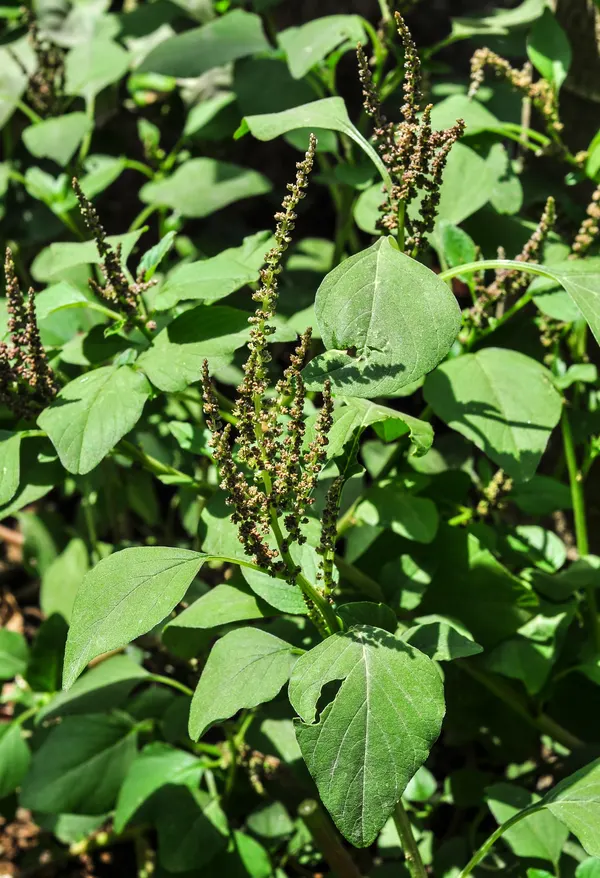
Amaranth greens
Amaranthus viridis(?)
Other names: Amaranth greens
Edible plantPhoto credit: Joydeep (Wikimedia Commons)
Safety information
Safety information
Toxicity: Soluble oxalates and nitrate accumulation (can be high on nitrate-rich soil); cook and discard water. Raw, large quantities discouraged.
Contraindications: Calcium-oxalate stone history; infants (nitrate/methaemoglobinaemia caution).
Interactions: None established at food doses.
Evidence level
Reported in folk medicine sources; not clinically validated. Folk and historical sources have not been validated by clinical research.
Preparations
cooked · greens
Part used: greens
Traditional use: boiled/stir-fried to reduce oxalates/nitrates(Folk and historical sources have not been validated by clinical research.)
Proposed mechanism: cooking reduces oxalate/nitrate
cooked/popped · seed
Part used: seed
Traditional use: high-protein pseudocereal grain(Folk and historical sources have not been validated by clinical research.)
Edibility
Edible parts: Leaves cooked.
Toxic lookalike warning
Amaranthus seedlings closely resemble black nightshade (Solanum nigrum) seedlings (nightshade berries/foliage toxic) — confirm absence of nightshade's flowers/berries; mature pigweed otherwise distinctive.
Nutritional notes
Leaves rich in iron, calcium, vitamin A, vitamin C, folate, protein; seed high in lysine-rich protein, magnesium, manganese — a functional gluten-free grain.
Healing traditions
Related plants
Sources (2)
- USDA FoodData Central (amaranth leaves; amaranth grain)
- food-composition reviews of Amaranthus
Sourcing & resources
Affiliate links — we may earn a small commission at no extra cost to you.