
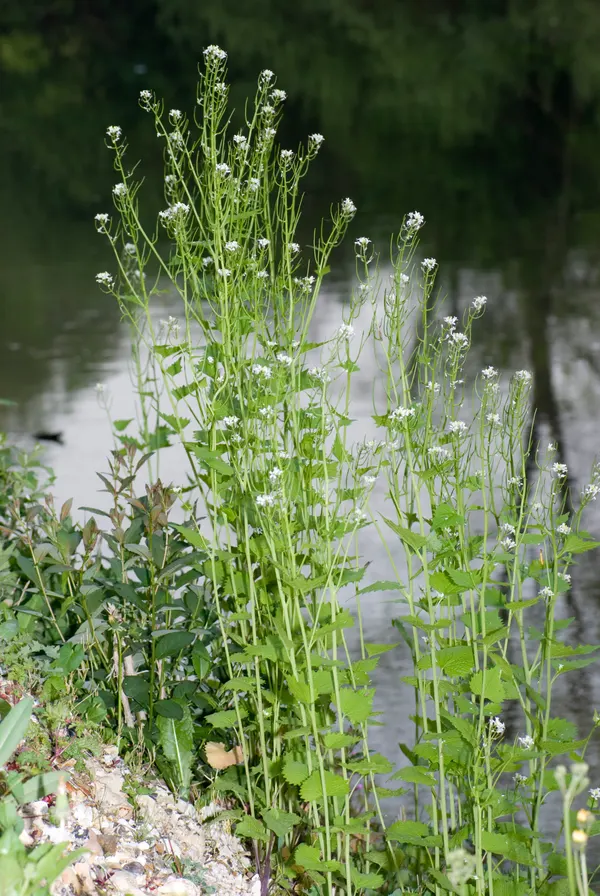
Garlic mustard
Alliaria petiolata
Other names: Garlic mustard
Edible plantPhoto credit: O. Pichard
Safety information
Safety information
Toxicity: Contains glucosinolates and small amounts of cyanide-type compounds in leaves; bitterness increases with maturity. Moderate amounts; cooking reduces pungency.
Contraindications: Thyroid caution only at implausibly high glucosinolate intakes; none at culinary doses.
Interactions: None established at food doses.
Evidence level
Reported in folk medicine sources; not clinically validated. Folk and historical sources have not been validated by clinical research.
Preparations
edible-raw · leaf
Part used: leaf
Traditional use: pesto/salad(Folk and historical sources have not been validated by clinical research.)
cooked · leaf
Part used: leaf
Traditional use: reduces bitterness/glucosinolate pungency(Folk and historical sources have not been validated by clinical research.)
Proposed mechanism: cooking reduces pungency
grated · root
Part used: root
Traditional use: horseradish-like condiment(Folk and historical sources have not been validated by clinical research.)
Edibility
Edible parts: Leaves raw/cooked; root as condiment.
Toxic lookalike warning
Young garlic-mustard rosettes confused with ground ivy (Glechoma), young foxglove (Digitalis, lethal) and other rosettes; the crushed-leaf garlic-and-mustard smell plus toothed heart/kidney-shaped leaves are the confirming features. Exclude foxglove by leaf venation/hairiness.
Nutritional notes
Vitamin A, vitamin C, vitamin E, glucosinolates (isothiocyanate precursors); functional brassica-type phytochemistry.
Healing traditions
Related plants
Sources (2)
- Foraging/ethnobotanical references
- brassica glucosinolate food-composition literature
Sourcing & resources
Affiliate links — we may earn a small commission at no extra cost to you.