
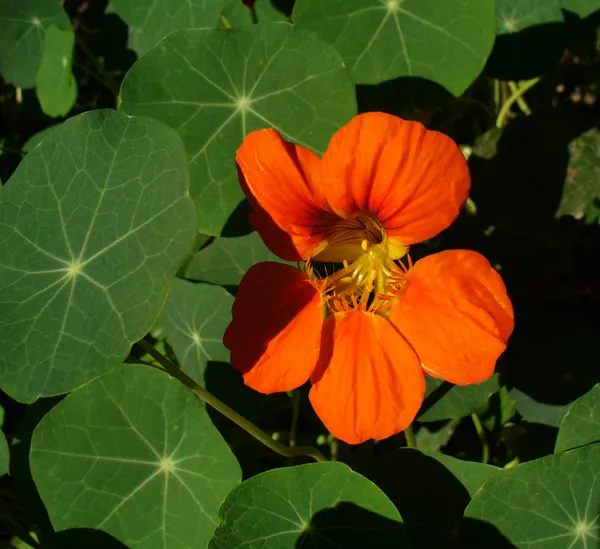
Nasturtium
Tropaeolum majus
Other names: Garden nasturtium, Indian cress, Tropaeoli majoris herba
Edible plantPhoto credit: George Chernilevsky / Wikimedia Commons
Safety information
Safety information
Toxicity: Low at culinary/traditional doses; isothiocyanates are mucosa-irritant — high doses can cause GI/mucosal and (rarely) stomach irritation.
Contraindications: Gastric/duodenal ulcers and kidney inflammation (isothiocyanate irritation); infants/young children; pregnancy/lactation (insufficient data for medicinal doses).
Interactions: None firmly established; theoretical additive mucosal irritation with other isothiocyanate/mustard-oil herbs (horseradish, mustard) and NSAIDs.
Pregnancy & breastfeeding: Insufficient data for medicinal doses — avoid.
Evidence level
Supported by clinical trials in humans.
Preparations
edible-raw · leaf
Part used: leaf
Traditional use: peppery salad green(Folk and historical sources have not been validated by clinical research.)
Proposed mechanism: glucotropaeolin → benzyl isothiocyanate (mustard oil)
infusion · aerial parts
Part used: aerial parts
Traditional use: urinary antiseptic / respiratory infection (with horseradish)
Proposed mechanism: benzyl isothiocyanate excreted in urine — antimicrobial
Dosage note (descriptive only): GI/ulcer/kidney caution at medicinal doses
Associated conditions
Edibility
Edible parts: leaves and flowers raw (peppery, cress-like) in salads; unripe seeds pickled as a caper substitute
Toxic lookalike warning
Cultivated nasturtium is distinctive (round peltate leaves, spurred flowers) and rarely confused; when foraging, do not confuse ornamental garden nasturtium with unrelated 'cresses'
Nutritional notes
Leaves/flowers provide vitamin C and carotenoids; glucosinolate (mustard-oil) phytochemicals; a functional peppery salad green
Healing traditions
Related plants
Sources (3)
- A combination of Tropaeolum majus herb and Armoracia rusticana root for the treatment of acute bronchitis (ScienceDirect, 2023)
- Nasturtium (Tropaeolum majus) — Herbal Reality (EN)
- The Glucosinolate–Myrosinase System in Nasturtium (Tropaeolum majus L.) (J. Agric. Food Chem., 2008)
Sourcing & resources
Affiliate links — we may earn a small commission at no extra cost to you.