
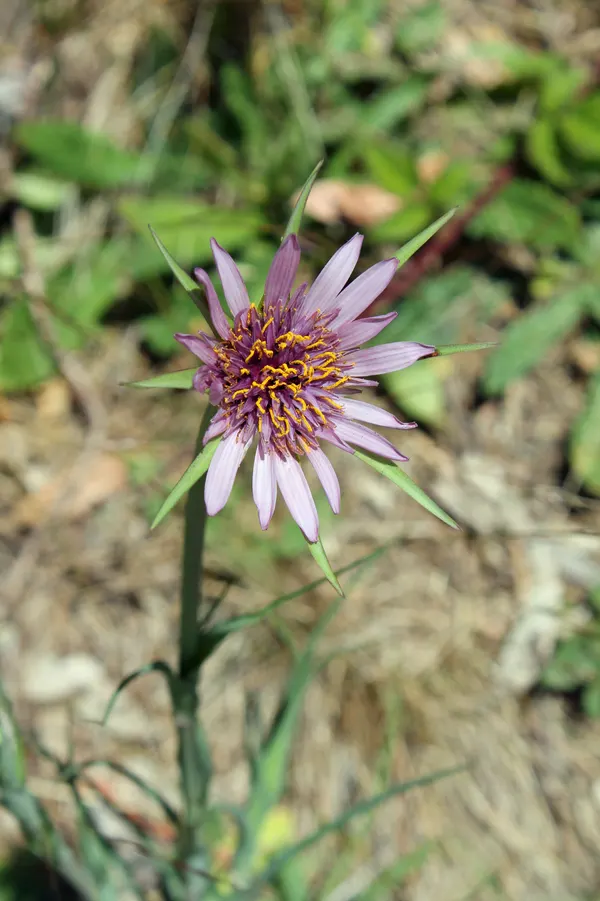
Salsify
Tragopogon porrifolius
Other names: Salsify
Edible plantPhoto credit: Sarah Stierch
Safety information
Safety information
Toxicity: Low; latex in stems (Asteraceae) may cause mild contact reaction.
Contraindications: Asteraceae allergy; fructan/FODMAP sensitivity (inulin).
Interactions: None established.
Evidence level
Reported in folk medicine sources; not clinically validated. Folk and historical sources have not been validated by clinical research.
Preparations
cooked · root
Part used: root
Traditional use: boiled/roasted, oyster-like flavour(Folk and historical sources have not been validated by clinical research.)
raw/cooked · young leaf
Part used: young leaf
Traditional use: potherb(Folk and historical sources have not been validated by clinical research.)
Edibility
Edible parts: Root cooked; young shoots.
Toxic lookalike warning
Tragopogon rosettes/roots confused with other Asteraceae taproots; grass-like leaves and single yellow/purple ligulate flower with long bracts plus milky latex confirm ID. Exclude intermixed ragwort (PA-hepatotoxic) and avoid any non-latex root.
Nutritional notes
Root rich in inulin (prebiotic), fibre, potassium, vitamin C; functional prebiotic root.
Healing traditions
Related plants
Sources (2)
- Food-composition data for Tragopogon porrifolius
- foraging references
Sourcing & resources
Affiliate links — we may earn a small commission at no extra cost to you.