
Safety information
Safety information
Toxicity: Low as food/tea; concentrated thyme essential oil (thymol/carvacrol) irritant to skin/mucosa, not for undiluted internal use. | Mild as tea/culinary herb. Concentrated thyme essential oil (thymol/carvacrol) is a skin/mucosa irritant — not to be taken neat; excess thymol can irritate GI tract.
Contraindications: Essential oil not for pregnancy/young children internally; thyme-oil caution in those with reflux; thymol allergy. | Caution in pregnancy at medicinal/concentrated doses (culinary/tea amounts generally considered safe). Lamiaceae allergy. Avoid essential oil in young children/asthmatics (airway irritation).
Interactions: Strong extracts theoretical additive with anticoagulants and hypotensives; minimal for culinary amounts. | Theoretical: thymol-rich preparations may have additive antiplatelet/anticoagulant effect; additive with other expectorants. Limited robust data.
Pregnancy & breastfeeding: Essential oil not for pregnancy internally. | Caution at medicinal/concentrated doses; culinary/tea amounts generally considered safe (specific harm not verified in a cited source).
Evidence level
Supported by laboratory or animal studies; not yet confirmed in humans.
Preparations
infusion · leaf/top
Part used: leaf/top
Traditional use: folk cough/cold and digestive tea (carminative, expectorant; gargle for sore throat)
Proposed mechanism: thymol/carvacrol antimicrobial and expectorant
cooked (seasoning) · leaf/top
Part used: leaf/top
Traditional use: aromatic culinary herb(Folk and historical sources have not been validated by clinical research.)
syrup · aerial parts
Part used: aerial parts
Traditional use: cough preparation
infusion · aerial flowering parts
Part used: aerial flowering parts
Traditional use: expectorant for cough/bronchitis, sore throat, digestive upset; calming/aromatic tea
Proposed mechanism: Thymol and carvacrol — antimicrobial and bronchial-spasmolytic/secretolytic (preclinical)
Dosage note (descriptive only): EMA traditional-use status for Thymi herba / Serpylli herba as expectorant for cough with cold
Associated conditions
Edibility
Edible parts: leaves/flowering tops as seasoning and tea | Leaves/flowering tops as a culinary herb (milder than common thyme) and as tea, raw or cooked.
Toxic lookalike warning
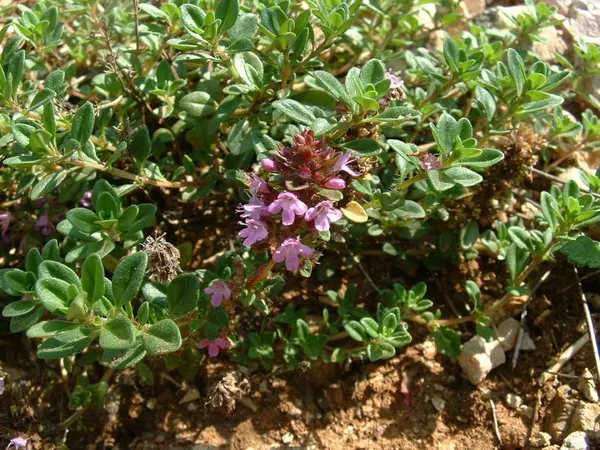
Low aromatic mat-forming herbs can be confused with non-aromatic lookalikes; confirm the strong thyme aroma of a known Thymus before use. | Confirm true Thymus by aromatic mint-family scent and creeping mat habit; do not confuse with non-aromatic low mat-forming Lamiaceae or thyme-leaved groundcovers. Garden thyme (T. vulgaris) is a close, safe relative.
Nutritional notes
Aromatic herb; minor nutritional role (some iron, manganese, vitamin C in fresh leaf). | Small culinary amounts; antioxidants (thymol, carvacrol, rosmarinic acid), trace vitamins/minerals — mainly aromatic/flavoring.
Healing traditions
Related plants
Sources (3)
- Bussmann et al., A comparative ethnobotany ... Republic of Georgia, J Ethnobiol Ethnomed 2016;12:43
- Thymus serpyllum — Wikipedia, 2026
- Serpylli herba — EMA herbal medicine (Thymus serpyllum L., herba), EMA/HMPC (URL re-verify before publication)
Sourcing & resources
Affiliate links — we may earn a small commission at no extra cost to you.