
Safety information
Safety information
Toxicity: Safe in normal food amounts. Methylxanthines (theobromine, caffeine) cause stimulant effects; very high intakes -> insomnia, tachycardia, headache, GI upset. Theobromine is highly toxic to dogs/cats.
Contraindications: Caffeine/theobromine sensitivity; arrhythmia / uncontrolled heart conditions (large stimulant doses); GERD/reflux; anxiety/insomnia; pets. Caution in pregnancy with high caffeine intake.
Interactions: Additive stimulant effect with caffeine/methylxanthines; theoretical interactions with MAO inhibitors (tyramine) and cardiac drugs; may potentiate vasodilators at high flavanol doses.
Pregnancy & breastfeeding: Caution in pregnancy with high caffeine intake.
Evidence level
Supported by clinical trials in humans.
Preparations
cocoa powder; dark chocolate; cocoa-flavanol extracts/capsules · seeds/beans
Part used: seeds/beans
fermented, roasted, ground beans as beverage · seeds/beans
Part used: seeds/beans
Traditional use: fever, fatigue, shortness of breath, heart/chest conditions; stimulant/nutritive beverage; vehicle for other remedies
Proposed mechanism: cocoa flavanols (catechin, epicatechin, procyanidins) improve endothelium-dependent vasodilation; theobromine, caffeine
Dosage note (descriptive only): EFSA health claim 200 mg cocoa flavanols/day
Associated conditions
Edibility
Edible parts: Seeds/beans (fermented + roasted/processed) into cocoa/chocolate; fruit pulp edible raw.
Toxic lookalike warning
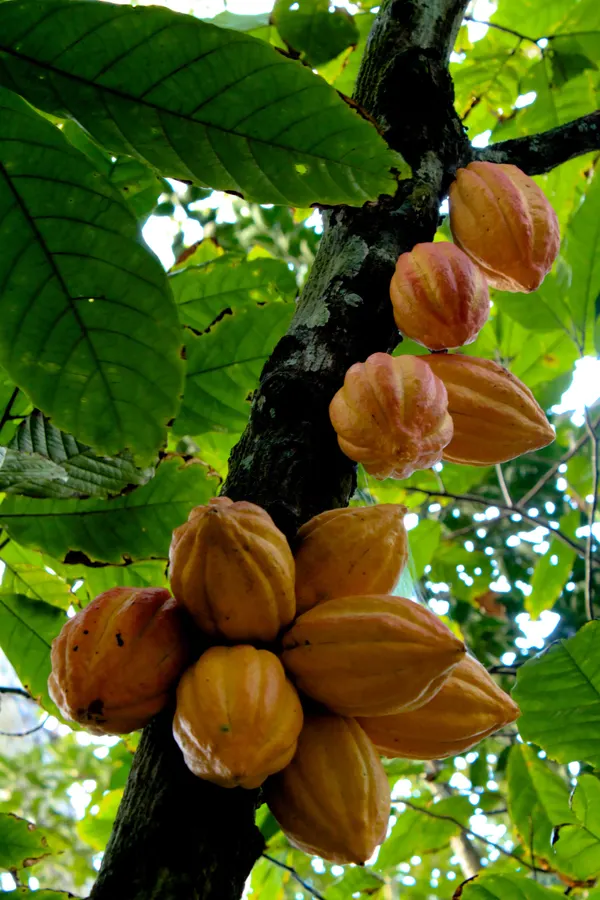
Cacao pod is distinctive; unprocessed raw beans are bitter and high in theobromine — never feed any cacao/chocolate product to pets.
Nutritional notes
Flavanols, theobromine, minerals (Mg, Fe, Cu, Mn), fiber, fat (cocoa butter). Dark chocolate is calorie/fat-dense; sweetened chocolate adds sugar.
Healing traditions
Related plants
Sources (2)
- Theobroma cacao L., Pharmacological Research, 2009
- EFSA Scientific Opinion — cocoa flavanols, 2012
Sourcing & resources
Affiliate links — we may earn a small commission at no extra cost to you.