
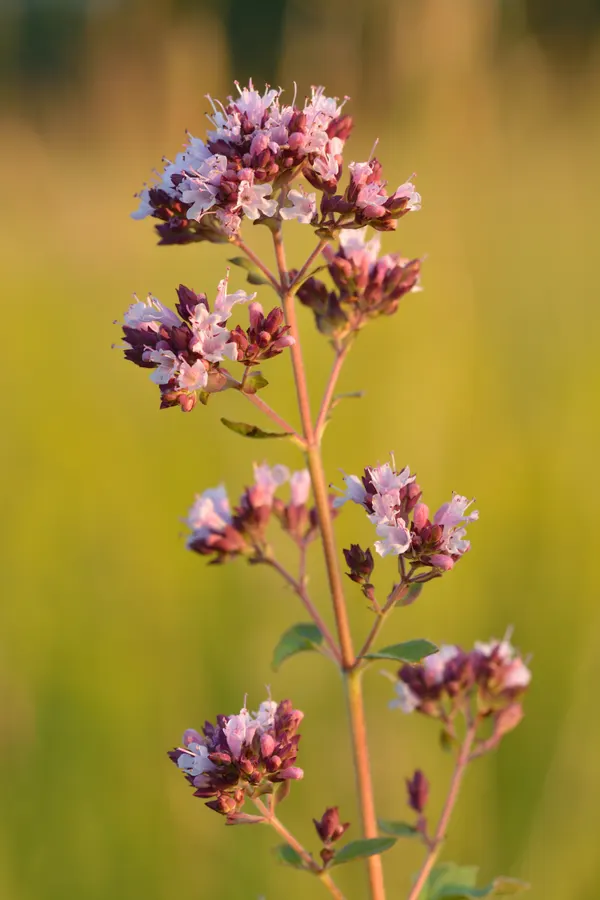
Oregano
Origanum vulgare
Other names: Oregano, душица (dushitsa), Oregano (wild marjoram)
Edible plantPhoto credit: Ivar Leidus
Safety information
Safety information
Toxicity: Culinary amounts safe. Concentrated oregano essential oil (high carvacrol/thymol) is a mucosal irritant and must be diluted; not for undiluted ingestion. | Mild as food/tea. Concentrated essential oil (high carvacrol/thymol) is a skin/mucosa irritant and should not be ingested neat.
Contraindications: Pregnancy (avoid medicinal/oil amounts); oil contraindicated undiluted. | Pregnancy — avoid medicinal/concentrated amounts (folk emmenagogue/uterine stimulant; culinary amounts considered safe). Possible allergy in those sensitive to Lamiaceae or oregano pollen.
Interactions: Theoretical antiplatelet/hypoglycaemic at high oil doses. | Theoretical: may potentiate anticoagulants/antiplatelets and additive hypoglycemia (limited data); high-dose oil may irritate GI.
Pregnancy & breastfeeding: Pregnancy (avoid medicinal/oil amounts). | Avoid medicinal/concentrated amounts (folk emmenagogue/uterine stimulant); culinary amounts considered safe.
Evidence level
Supported by laboratory or animal studies; not yet confirmed in humans.
Preparations
infusion · leaves and flowering tops
Part used: leaves and flowering tops
Traditional use: calming tea and 'women's herb' for nervous tension, insomnia, coughs/colds, digestive and menstrual complaints(Folk and historical sources have not been validated by clinical research.)
Proposed mechanism: Carvacrol, thymol show antimicrobial/antioxidant activity in vitro
essential oil · leaves/flowering tops
Part used: leaves/flowering tops
Traditional use: antimicrobial claims (unproven)
culinary herb (dried/fresh) · leaf/flowering top
Part used: leaf/flowering top
Traditional use: digestive/respiratory folk use; antimicrobial/antioxidant
Proposed mechanism: carvacrol/thymol
Dosage note (descriptive only): culinary amounts safe; oil must be diluted
infusion / essential oil · leaf
Part used: leaf
Traditional use: concentrated (carvacrol/thymol)
Dosage note (descriptive only): not for undiluted ingestion
Associated conditions
Edibility
Edible parts: Leaf as culinary herb. | Leaves (fresh or dried, raw as topping or cooked); staple culinary herb.
Toxic lookalike warning
Culinary oregano grown/sold as a known herb; wild Origanum and Thymus not generally confused with toxic plants, but Lamiaceae foragers should confirm the aromatic mint-family scent. | 'Oregano' is a flavor, not one species — Cuban oregano (Plectranthus amboinicus), Mexican oregano (Lippia graveolens, Verbenaceae) and Hedeoma are DIFFERENT plants with different safety profiles; ID true Origanum by mint-family square stem and scent.
Nutritional notes
Carvacrol, thymol, rosmarinic acid (antioxidant/antimicrobial phenolics); among the highest-antioxidant culinary herbs by ORAC-type assays. | Dried oregano high in antioxidants/polyphenols; vitamin K, manganese, fiber in small culinary amounts.
Healing traditions
Related plants
Sources (5)
- Food-phytochemistry/antioxidant literature on Origanum vulgare carvacrol
- culinary-herb composition references
- Origanum vulgare — Wikipedia, 2026
- Oregano — Drugs.com (Wolters Kluwer) professional monograph, 2016
- Dragland S et al., J Nutr 2003;133(5):1286-90 (PMID 12730411)
Sourcing & resources
Affiliate links — we may earn a small commission at no extra cost to you.