
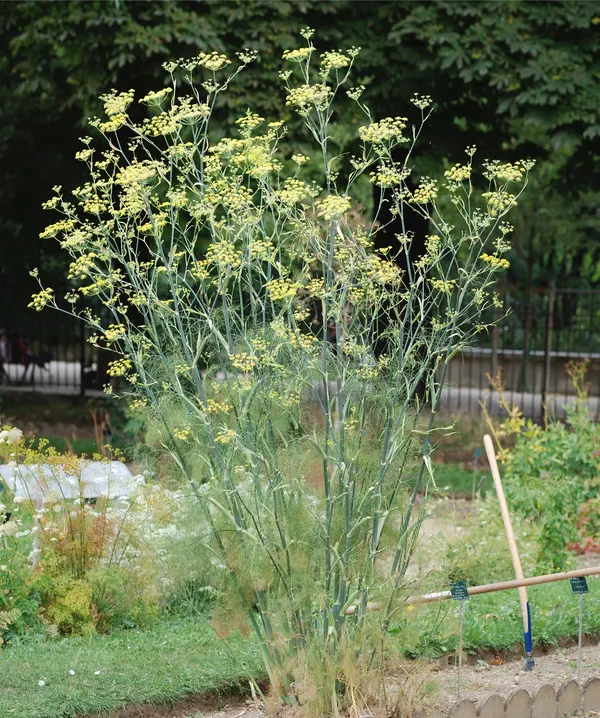
Fennel
Foeniculum vulgare
Other names: Fennel, Wild fennel
Edible plantPhoto credit: Alvesgaspar (Wikimedia Commons)
This plant carries serious safety risks. All information is for educational reference only.
Safety information
Toxicity: Generally mild; allergic reactions (skin/respiratory) possible. Essential oil and constituent estragole (methyleugenol-class) are genotoxic/carcinogenic concerns in animal studies - EMA limits high-dose/prolonged use and use in young children; pure oil restricted. | Mild as culinary herb/seed (anethole ~50-60%, fenchone). Modern: concentrated oil should not be given to infants/young children; high-dose oil (estragole) best avoided. | Low at culinary doses. Essential oil contains estragole and trans-anethole — EMA restricts duration/dose; advises against prolonged high-dose use (estragole genotoxicity concern); whole-spice culinary use low risk.
Contraindications: EMA: bitter-fennel preparations not recommended in children under 12; fennel tea/honey products for infant colic carry estragole-exposure cautions. Avoid medicinal/high doses in pregnancy and in estrogen-sensitive conditions (phytoestrogen concern). Allergy to Apiaceae (celery/carrot family). | None specified by source. Modern: avoid concentrated oil in pregnancy and infants. | Pregnancy/breastfeeding and young children — EMA cautions on medicinal fennel preparations (estragole); avoid high-dose fennel-seed teas in infants.
Interactions: Theoretical interaction with estrogen-sensitive therapies (phytoestrogen), ciprofloxacin (reduced absorption reported), additive effects with other estrogenic herbs - consult provider. | None specified by source. | Theoretical estrogenic activity; possible interaction with ciprofloxacin absorption (reported).
Pregnancy & breastfeeding: Avoid medicinal/high doses in pregnancy (phytoestrogen/estragole concern). | Avoid concentrated oil (modern). | Pregnancy/breastfeeding — EMA cautions on medicinal preparations (estragole).
Evidence level
Documented in systematic traditional medicine literature.
Preparations
This plant carries serious safety risks. All information is for educational reference only.
infusion · seed
Part used: seed
Traditional use: Traditionally used as a carminative for flatulence and colic, to stimulate digestion and appetite, to calm coughs, and to increase milk flow in nursing mothers.
How to prepare (traditional): Infusion: pour 1 cup of boiling water over 1-2 teaspoons of slightly crushed seeds and infuse, covered, 10 minutes. For flatulence take a cup about half an hour before meals.
Dosage note (descriptive only): Drunk three times a day. Commission E: 5-7 g herb daily.
Reference only — not a dosage instruction
tincture · seed
Part used: seed
Traditional use: Carminative.
How to prepare (traditional): Tincture at 1:5 in 40% alcohol.
Dosage note (descriptive only): 1-2 ml three times a day.
Reference only — not a dosage instruction
Associated conditions
Edibility
Edible parts: fruit (seeds) as culinary spice; bulb/stalks of Florence fennel as a vegetable (raw or cooked); leaves as herb | seeds (flavouring, liqueurs), feathery leaves (fish/salads), Florence fennel bulb/stems raw or cooked | Fronds, stalk, bulb, seed.
Toxic lookalike warning
Wild fennel and other umbellifers can be confused with deadly poison hemlock (Conium maculatum) and water hemlock (Cicuta) - fennel smells strongly of anise; never eat an unidentified umbellifer lacking that aroma. | As an Apiaceae, resembles deadly relatives - Fool's Parsley (Aethusa cynapium), Hemlock (Conium maculatum) and water dropwort; never forage by appearance (fennel smells of anise; hemlock smells foul). | CRITICAL (Apiaceae): feathery foliage confused with poison hemlock (Conium maculatum — coniine, lethal) and hemlock water-dropwort (Oenanthe crocata); fennel smells strongly of anise/liquorice when crushed and has NO purple-blotched stem, whereas poison hemlock has a smooth purple-spotted hollow stem and foul mousy smell. Smell and stem-spot check before any carrot-family forage.
Nutritional notes
Bulb: vitamin C, potassium, fiber, low calorie; seeds rich in anethole volatile oil. | Bulb and leaves edible vegetables; aromatic seeds a spice. | Fronds: vitamin C, potassium; seed: fibre, manganese, anethole; culinary spice and carminative functional role.
Healing traditions
Related plants
Sources (7)
- Grieve M., A Modern Herbal (1931) — Maud Grieve (1931)
- EMA/HMPC Foeniculi amari fructus (bitter fennel fruit) monograph & public summary
- EMA public statement on estragole/methyleugenol
- NIH LactMed record for fennel
- EMA/HMPC Foeniculi amari fructus (bitter fennel fruit)
- NCCIH/food-composition data
- USDA FoodData Central (fennel bulb; fennel seed)