
Safety information
Safety information
Toxicity: Generally well tolerated; mild GI symptoms (flatulence), and allergic reactions in Asteraceae-sensitive people.
Contraindications: Bile-duct obstruction or gallstones (choleretic effect can worsen biliary obstruction). Hypersensitivity to Asteraceae. Limited pregnancy/breastfeeding data for extracts.
Interactions: Theoretical additive effect with lipid-lowering and antidiabetic drugs, and with anticoagulants - consult provider.
Pregnancy & breastfeeding: Limited pregnancy/breastfeeding data for extracts.
Evidence level
Documented in systematic traditional medicine literature.
Preparations
dry or liquid leaf extract / infusion / culinary vegetable · leaf
Part used: leaf
Traditional use: minor digestive/dyspeptic complaints (bloating, fullness, flatulence) via bitter/choleretic action; folk and modern promotion for cholesterol and liver/biliary support
Proposed mechanism: caffeoylquinic acids (cynarin, chlorogenic acid) and luteolin choleretic (stimulate bile flow - aiding fat digestion and proposed to lower cholesterol via bile-acid loss) and antioxidant/hepatoprotective; bitters stimulate digestive secretion - preclinical/mechanistic
Dosage note (descriptive only): lipid/dyspepsia trials used artichoke leaf extract ~several hundred mg to ~1-2 g/day standardized extract; trial regimen, descriptive only
Associated conditions
Edibility
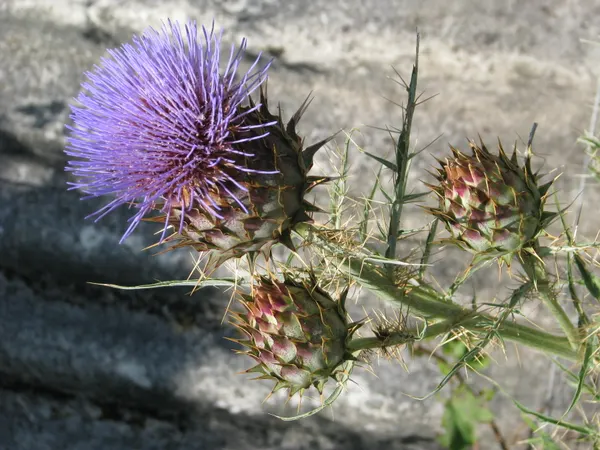
Edible parts: the flower-bud heart, fleshy bract bases, and stalk are eaten cooked (a common vegetable); related cardoon stalks are eaten
Toxic lookalike warning
Cultivated and unmistakable. The medicinal part (leaf) is bitter and not the usual food.
Nutritional notes
Functional food - fibre (inulin, a prebiotic), folate, vitamin C, potassium, antioxidants; low calorie.
Healing traditions
Related plants
Sources (1)
- EMA/HMPC Cynarae folium (artichoke leaf) monograph & public summary
Sourcing & resources
Affiliate links — we may earn a small commission at no extra cost to you.