
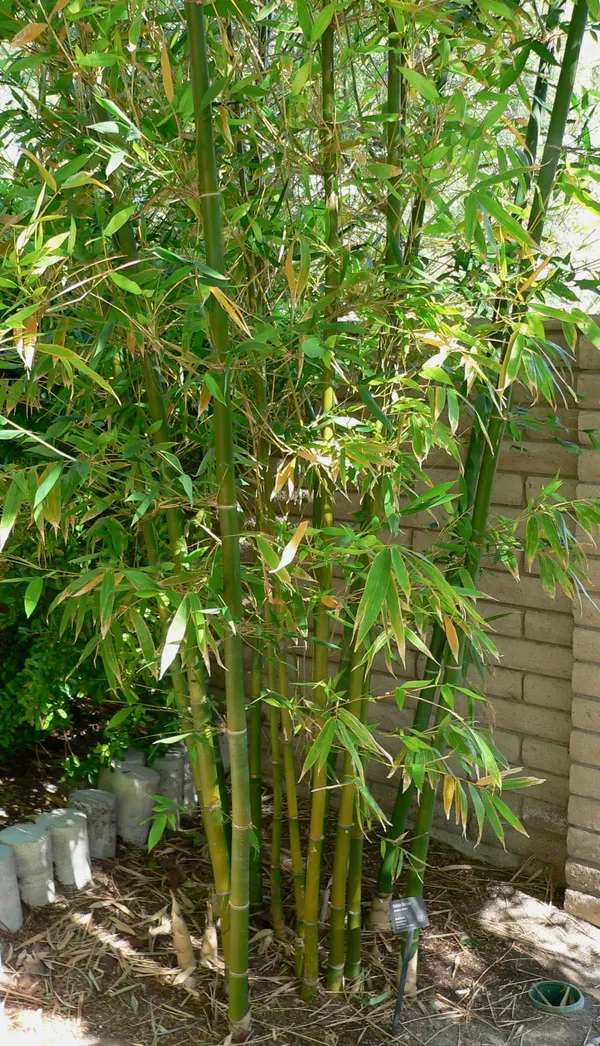
Bamboo shoots
Bambusa(?)
Other names: Bamboo shoots
Edible plantPhoto credit: Stan Shebs
This plant carries serious safety risks. All information is for educational reference only.
Safety information
Toxicity: Raw shoots contain cyanogenic glycosides (notably taxiphyllin) that release hydrogen cyanide; concentrations highest at the tip. Boiling (with water changes) hydrolyses and volatilises the cyanide — essential processing. Raw/undercooked shoots can cause acute cyanide toxicity.
Contraindications: Never consume raw; thyroid caution only at extreme intakes.
Interactions: None established (food).
Evidence level
Reported in folk medicine sources; not clinically validated. Folk and historical sources have not been validated by clinical research.
Preparations
This plant carries serious safety risks. All information is for educational reference only.
boiled · young shoot
Part used: young shoot
Traditional use: sliced thin, water changed before eating — never raw(Folk and historical sources have not been validated by clinical research.)
Proposed mechanism: boiling hydrolyses/volatilises cyanogenic glycosides (taxiphyllin)
Edibility
Edible parts: Shoots, only after thorough boiling.
Toxic lookalike warning
Commercial/known bamboo not generally confused with toxic species, but among wild grasses/reeds avoid confusing young bamboo shoots with shoots of unrelated plants; the cyanogenic-processing requirement is the dominant safety issue.
Nutritional notes
Low calorie, high fibre, potassium, some protein; functional fibre vegetable after detox processing.
Healing traditions
Related plants
Sources (3)
- Piršelová & Jakubčinová 2025 Front Plant Sci cyanogenic-glycoside review (PMC12350405)
- Das & Tamang 2026 Sci Rep taxiphyllin-degradation study (PMC13125572)
- Lachowicz 2024 Biomolecules cyanide/cyanogenic toxicity review (PMC11591714)