
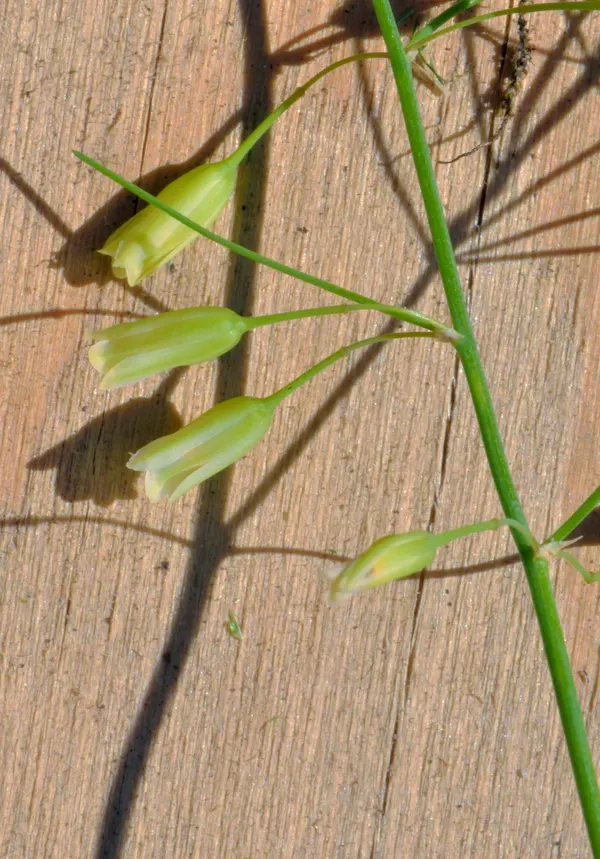
Wild asparagus
Asparagus officinalis
Other names: Wild asparagus
Edible plantPhoto credit: Rasbak / Wikimedia Commons
Safety information
Safety information
Toxicity: Spears: none known as food (harmless asparagusic-acid metabolites cause the characteristic urine odour). The ripe red berries are mildly toxic — not food. | Low. Mature plant bears red berries that are toxic (do not eat the fruit). Contains purines (gout relevance) and asparagusic acid (harmless odorous urine metabolite).
Contraindications: None well established for the spear; diuretic root caution in kidney disease/fluid restriction; possible allergy. | Gout (purine content) at high intake; berries toxic.
Interactions: Diuretic root theoretical additive with diuretics (and lithium clearance); minimal for food spears. | Theoretical additive diuretic effect.
Evidence level
Supported by laboratory or animal studies; not yet confirmed in humans.
Preparations
edible-cooked · young spears
Part used: young spears
Traditional use: prized cooked vegetable(Folk and historical sources have not been validated by clinical research.)
folk medicinal · root
Part used: root
Traditional use: mild diuretic
Proposed mechanism: saponins, asparagine diuretic
cooked · young shoot
Part used: young shoot
Traditional use: steamed/boiled/sautéed(Folk and historical sources have not been validated by clinical research.)
dietary · shoot
Part used: shoot
Traditional use: traditional diuretic
Associated conditions
Edibility
Edible parts: young spears cooked; not the berries or old woody stems | Young shoots only, cooked.
Toxic lookalike warning
Young asparagus spears are distinctive, but other emerging shoots in scrub can be confused; confirm Asparagus (scale-leaved spear opening to feathery 'cladodes', dioecious, red berries on female plants) and do not eat the red berries; avoid unknown emerging shoots. | Emerging spears confused with shoots of various plants; ferny adult foliage resembles toxic ornamentals; do not eat the red autumn berries; avoid confusing wild asparagus stands with black bryony (Dioscorea/Tamus communis) twining shoots, which are toxic. Harvest only identified true-asparagus spears.
Nutritional notes
Folate, vitamin K, vitamin C, provitamin-A, fibre and inulin-type prebiotics, plus glutathione and rutin — a nutrient-dense spring vegetable. | Folate, vitamin K, vitamin C, vitamin A, fibre, inulin-type fructans (prebiotic); low calorie functional vegetable.
Healing traditions
Related plants
Sources (5)
- Bussmann et al., A comparative ethnobotany ... Republic of Georgia, J Ethnobiol Ethnomed 2016;12:43
- Bussmann et al., Unity in diversity — food plants of Sakartvelo, 2021
- USDA FoodData Central (asparagus)
- food-composition references
- foraging guides
Sourcing & resources
Affiliate links — we may earn a small commission at no extra cost to you.