Corn / Cornsilk
Zea mays
Other names: Corn / Cornsilk
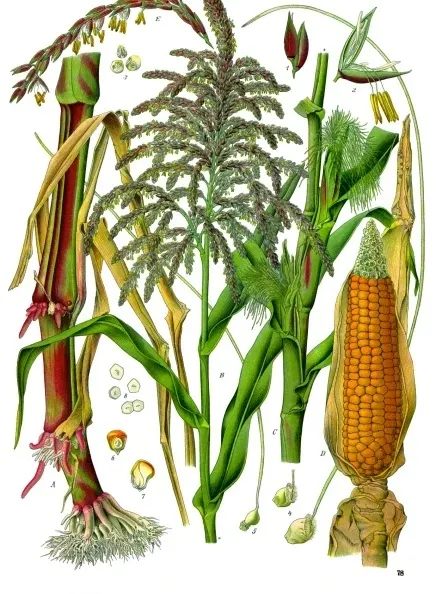
Edible plantPhoto credit: Franz Eugen Köhler, Köhler's Medizinal-Pflanzen
Safety information
Safety information
Toxicity: None known.
Contraindications: None notable.
Interactions: None specifically noted.
Evidence level
Supported by laboratory or animal studies; not yet confirmed in humans.
Preparations
infusion · other
Part used: other
Traditional use: Soothing urinary remedy for cystitis.
How to prepare (traditional): An infusion is made from the cornsilk (the silky stamens around the cob); it is soothing.
Dosage note (descriptive only): For cystitis, drink 2 cups (500 ml) daily.
decoction · other
Part used: other
Traditional use: Traditional poultice for sores and boils (external).
How to prepare (traditional): A decoction of corn meal is applied as a poultice.
Dosage note (descriptive only): Apply as a poultice to sores and boils.
tincture · other
Part used: other
Traditional use: For cystitis and urinary problems.
How to prepare (traditional): A tincture of cornsilk is made; can be combined with buchu tincture.
Dosage note (descriptive only): For cystitis, combine 1/3 cup (80 ml) cornsilk tincture with 1 tbsp buchu tincture and take 1 tsp with water three times a day.
capsule · other
Part used: other
Traditional use: Diuretic for edema.
How to prepare (traditional): Cornsilk is made into capsules.
Dosage note (descriptive only): For edema, 2 g daily.
Associated conditions
Edibility
Edible parts: a staple food grain; cornsilk is also edible/brewed as tea
Nutritional notes
Staple carbohydrate; pigmented corn rich in antioxidants and eye-protective carotenoids.
Healing traditions
Related plants
Sources (1)
- Chevallier A., Encyclopedia of Herbal Medicine (2016) — Andrew Chevallier (2016)
Sourcing & resources
Affiliate links — we may earn a small commission at no extra cost to you.