
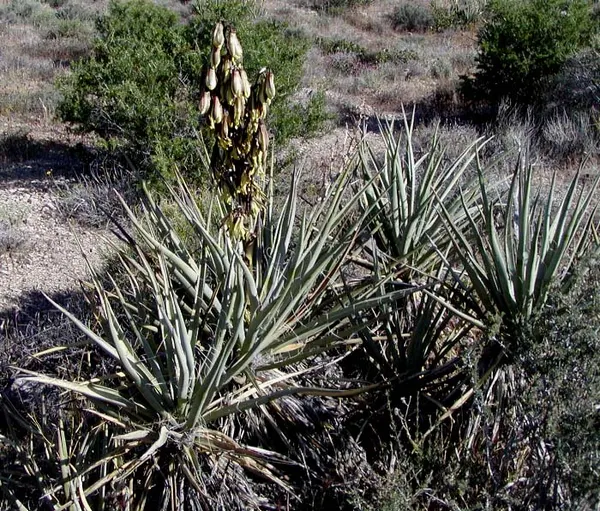
Safety information
Safety information
Toxicity: Saponins mildly toxic/irritant if ingested in quantity (hemolytic) — use as food is of cooked fruit/flowers, not raw saponin-rich root.
Contraindications: GI irritation with high saponin intake.
Interactions: None well documented.
Evidence level
Supported by laboratory or animal studies; not yet confirmed in humans.
Preparations
fruit roasted · fruit
Part used: fruit
Traditional use: food(Folk and historical sources have not been validated by clinical research.)
root pounded for soap/shampoo · root
Part used: root
Traditional use: soap/shampoo (and ceremonially, hair washing); poultices for inflammation/sprains; saponins studied for arthritis
Proposed mechanism: steroidal saponins — weak anti-inflammatory/antiarthritic signals in older studies
flowers/stalk cooked · flower
Part used: flower
Traditional use: food(Folk and historical sources have not been validated by clinical research.)
Associated conditions
Edibility
Edible parts: Ripe fruit (roasted/dried, sweet; Y. baccata 'banana yucca'), flowers and young flower stalks (cooked).
Toxic lookalike warning
Do not confuse Yucca with superficially similar Agave or with sword-leaved ornamentals; raw saponin-rich root is not food.
Nutritional notes
Fruit: carbohydrates, fiber, vitamin C; staple/famine food.
Healing traditions
Related plants
Sources (2)
- Moerman, Native American Ethnobotany — Daniel Moerman
- USDA NRCS PLANTS Database
Sourcing & resources
Affiliate links — we may earn a small commission at no extra cost to you.