
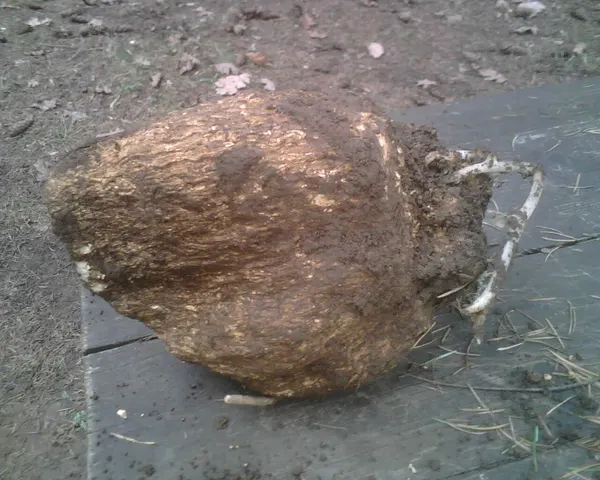
Fu ling / poria
Wolfiporia extensa
Other names: 茯苓 fúlíng; 茯神 fúshén, Fu ling / poria
Edible plantPhoto credit: Trappem at English Wikipedia
Safety information
Safety information
Toxicity: Generally low-toxicity in traditional use; comprehensive human safety data limited.
Contraindications: Traditionally cautioned in cases without dampness or with frequent urination; pregnancy/clinical data limited.
Interactions: Theoretical additive effect with diuretics; otherwise not well characterized.
Pregnancy & breastfeeding: Data limited.
Evidence level
Supported by laboratory or animal studies; not yet confirmed in humans.
Preparations
powder · sclerotium
Part used: sclerotium
decoction · sclerotium
Part used: sclerotium
Traditional use: draining dampness, promoting urination, strengthening spleen, calming spirit (fushen)
Proposed mechanism: triterpenes (pachymic acid, poricoic acids), beta-pachyman/polysaccharides
Associated conditions
Edibility
Edible parts: Sclerotium used as bland food-medicine (fuling cakes/茯苓饼, tonic congee) at traditional amounts.
Toxic lookalike warning
Cultivated/authenticated fungal sclerotium; never substitute foraged underground fungi, which can be misidentified and toxic.
Nutritional notes
Functional-food fungus; mainly indigestible polysaccharides (beta-pachyman) and triterpenes; low conventional nutrient value.
Healing traditions
Related plants
Sources (2)
- Wolfiporia extensa / Poria cocos (Wikipedia), English, accessed 2026, https://en.wikipedia.org/wiki/Wolfiporia_extensa
- Poria cocos - Memorial Sloan Kettering About Herbs, English, https://www.mskcc.org/cancer-care/integrative-medicine/herbs/poria-cocos
Sourcing & resources
Affiliate links — we may earn a small commission at no extra cost to you.