
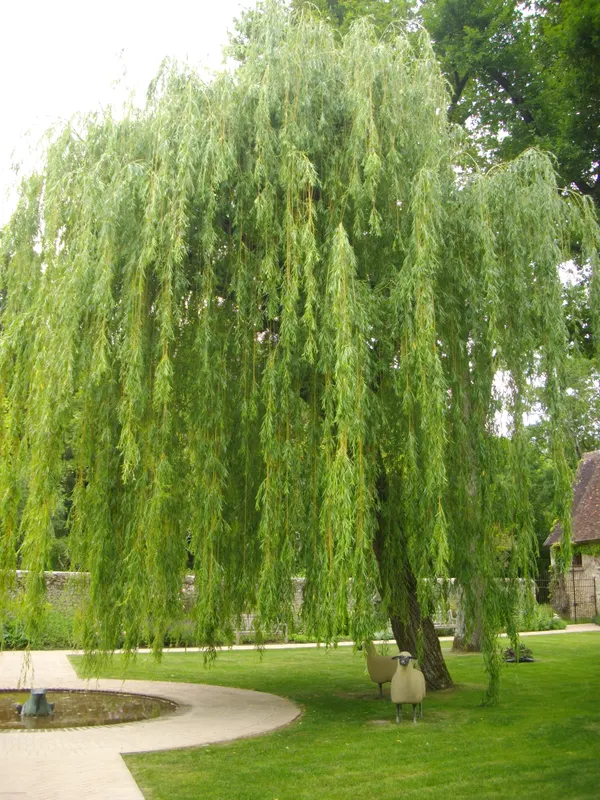
Weeping willow / willow
Salix babylonica
Other names: Weeping willow / willow
Photo credit: Fab5669
Safety information
Safety information
Toxicity: Low for external leaf use. (General knowledge: salicylate-containing willow taken internally carries aspirin-like cautions.)
Contraindications: (General knowledge) salicylate sensitivity; avoid internal use in children with viral fever (Reye's-syndrome analogy) — relevant only if ingested, which the wrap does not.
Interactions: (General knowledge) salicylate–anticoagulant additive effect if taken internally.
Evidence level
Reported in folk medicine sources; not clinically validated. Folk and historical sources have not been validated by clinical research.
Preparations
poultice / body wrap · leaves
Part used: leaves
Traditional use: cooling wrap for high fever (febrile patient wrapped in fresh willow leaves)(Folk and historical sources have not been validated by clinical research.)
Proposed mechanism: Willow bark is the classic historical source of salicylates (general pharmacognosy, not claimed/tested by source)
Associated conditions
Nutritional notes
n/a
Healing traditions
Related plants
Sources (1)
- Masalebi Saqartvelos Etnografiisatvis, 2020, N1 (2020)
Sourcing & resources
Affiliate links — we may earn a small commission at no extra cost to you.