
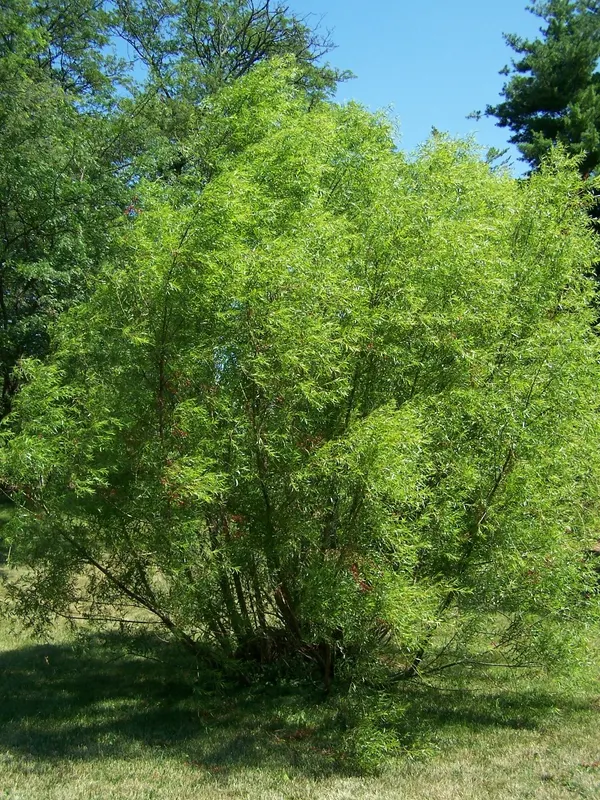
Safety information
Safety information
Toxicity: Low at customary doses; salicylate-class cautions.
Contraindications: Salicylate/aspirin allergy, children (Reye's syndrome risk with salicylates), bleeding disorders, late pregnancy.
Interactions: Additive with anticoagulants/NSAIDs; salicylate interactions.
Pregnancy & breastfeeding: Late pregnancy: caution (salicylate).
Evidence level
Supported by clinical trials in humans.
Preparations
poultice; bark chewed · inner bark
Part used: inner bark
decoction/infusion (bark) · inner bark
Part used: inner bark
Traditional use: pain, fever, headache, toothache, inflammation (the 'aspirin' of many Native pharmacopeias); poultices for wounds
Proposed mechanism: salicin/salicylates -> anti-inflammatory/analgesic; standardized willow bark has modest clinical evidence for low-back pain
Associated conditions
Edibility
Edible parts: Inner bark and young shoots are a documented famine food (peeled, eaten/cooked); buds/leaves nibbled.
Toxic lookalike warning
Confirm Salix ID; flavor bitter.
Nutritional notes
Inner bark: emergency carbohydrate; vitamin C in spring growth.
Healing traditions
Related plants
- Jatamansi (spikenard)Nardostachys jatamansiClinical
- Gokshura (puncture vine)Tribulus terrestrisClinical
- Nirgundi (five-leaved chaste tree)Vitex negundoClinical
- Sichuan lovage rhizome / chuanxiong (川芎)Ligusticum chuanxiongClinical
- Horse ChestnutAesculus hippocastanumClinical
- WormwoodArtemisia absinthiumClinical
Sources (3)
- Moerman, Native American Ethnobotany — Daniel Moerman
- USDA NRCS PLANTS Database
- willow bark clinical reviews
Sourcing & resources
Affiliate links — we may earn a small commission at no extra cost to you.