
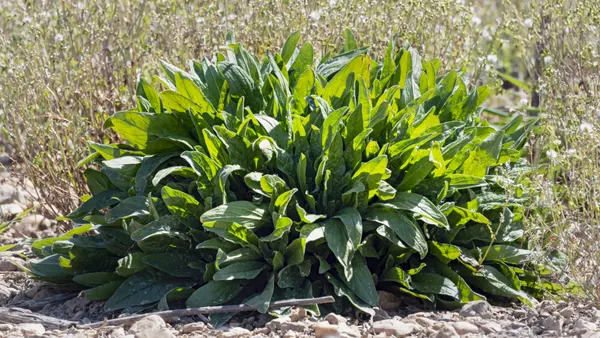
Wild/sheep sorrel & docks
Rumex acetosa(?)
Other names: Wild/sheep sorrel & docks, Common sorrel
Edible plantPhoto credit: Didier Descouens
Safety information
Safety information
Toxicity: Leaves contain oxalic acid/soluble oxalates; large quantities harmful (GI irritation; risk to kidney-stone-prone people; rare severe oxalate poisoning from very large raw intake). Generally safe in normal culinary amounts. Dock roots contain anthraquinones (laxative) — not for casual high-dose use. | High soluble oxalic acid/oxalates — pleasant sour taste comes from oxalate; eat in moderation, cooking reduces it. Excessive intake risks oxalate nephrotoxicity.
Contraindications: Kidney stones (oxalate), gout, renal impairment, rheumatoid conditions — limit intake; children should not eat large raw amounts; avoid in pregnancy for medicinal root (laxative anthraquinones). | Kidney stones (oxalate), renal impairment, gout; caution in children with large servings.
Interactions: Oxalate binds minerals (calcium, iron, magnesium) reducing absorption; high leaf intake (vitamin K) may affect warfarin; root anthraquinones may add to other laxatives and cause potassium loss relevant to digoxin/diuretics. | Oxalate may impair absorption of calcium/iron from the same meal.
Pregnancy & breastfeeding: Avoid medicinal root (laxative anthraquinones).
Evidence level
Supported by laboratory or animal studies; not yet confirmed in humans.
Preparations
edible-raw · sour leaf
Part used: sour leaf
Traditional use: fresh tangy spring green(Folk and historical sources have not been validated by clinical research.)
cooked · leaf
Part used: leaf
Traditional use: sour green soups, fillings(Folk and historical sources have not been validated by clinical research.)
folk medicinal · leaf/root
Part used: leaf/root
Traditional use: dock leaves for skin; root mild laxative
Proposed mechanism: root anthraquinones laxative
cooked · leaf
Part used: leaf
Traditional use: soups (green sorrel soup/borscht); purée(Folk and historical sources have not been validated by clinical research.)
Proposed mechanism: cooking reduces oxalate
edible-raw · young leaf
Part used: young leaf
Traditional use: small amounts, salad(Folk and historical sources have not been validated by clinical research.)
Dosage note (descriptive only): sparingly
Associated conditions
Edibility
Edible parts: young leaves raw (sparingly) or cooked | Young leaves raw (sparingly) or cooked.
Toxic lookalike warning
Arrow/spear-shaped sorrel leaves can resemble young leaves of lords-and-ladies (Arum, toxic) and other plants when small; confirm the sour taste of a known Rumex and the characteristic leaf shape; avoid unknown arrow-leaved plants. | Sorrel's arrow-shaped (hastate/sagittate) leaves confused with young lords-and-ladies (Arum maculatum) — arum contains needle-like calcium-oxalate raphides, toxic raw, leaves similar in shape; arum leaves glossy with netted veins and often dark-spotted, sorrel leaves matte with sour taste and basal lobes pointing backward. Taste-testing for identification is unsafe with arum present.
Nutritional notes
Vitamin C, some vitamin A and minerals; tangy low-calorie green (oxalate caveat means it should not be the dominant green in a diet). | High vitamin C, vitamin A, some magnesium/potassium; oxalate-limited.
Healing traditions
Related plants
Sources (4)
- Bussmann et al., A comparative ethnobotany ... Republic of Georgia, J Ethnobiol Ethnomed 2016;12:43
- Bussmann et al., Unity in diversity — food plants of Sakartvelo, 2021
- USDA FoodData Central (sorrel/dock)
- food-composition references for Rumex acetosa
Sourcing & resources
Affiliate links — we may earn a small commission at no extra cost to you.