
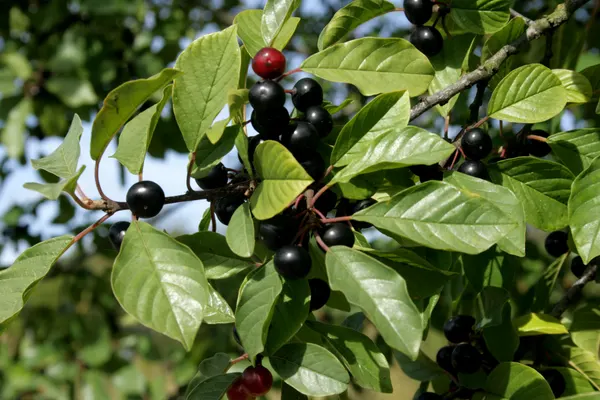
This plant carries serious safety risks. All information is for educational reference only.
Safety information
Toxicity: Serious if misused. Fresh/unaged bark causes violent vomiting, cramping and bloody diarrhoea — bark must be stored >=1 year or heat-treated. Chronic/over-use of anthranoid laxatives -> electrolyte loss (hypokalaemia), dependence, melanosis coli.
Contraindications: Pregnancy and lactation; children under 12; intestinal obstruction, ileus, undiagnosed abdominal pain, appendicitis, IBD (Crohn's/colitis), severe dehydration/electrolyte disturbance. Short-term occasional use only.
Interactions: Potassium loss potentiates cardiac glycoside (digoxin) toxicity and interacts with antiarrhythmics, diuretics, corticosteroids and liquorice (additive hypokalaemia).
Pregnancy & breastfeeding: Contraindicated in pregnancy and lactation.
Evidence level
Supported by clinical trials in humans.
Preparations
This plant carries serious safety risks. All information is for educational reference only.
standardised extracts (pharmaceutical) · bark
Part used: bark
decoction/infusion of dried aged bark · bark
Part used: bark
Traditional use: stimulant laxative for constipation
Proposed mechanism: anthranoid (anthraquinone) laxative — glucofrangulins/frangulins stimulate colonic motility
Dosage note (descriptive only): bark must be stored >=1 year or heat-treated before any use; short-term occasional use only
Reference only — not a dosage instruction
Associated conditions
Nutritional notes
Not a food source.
Healing traditions
Related plants
Sources (2)
- anthranoid-laxative pharmacology (general HMPC class assessment)
- EMA/HMPC Frangulae cortex monograph