
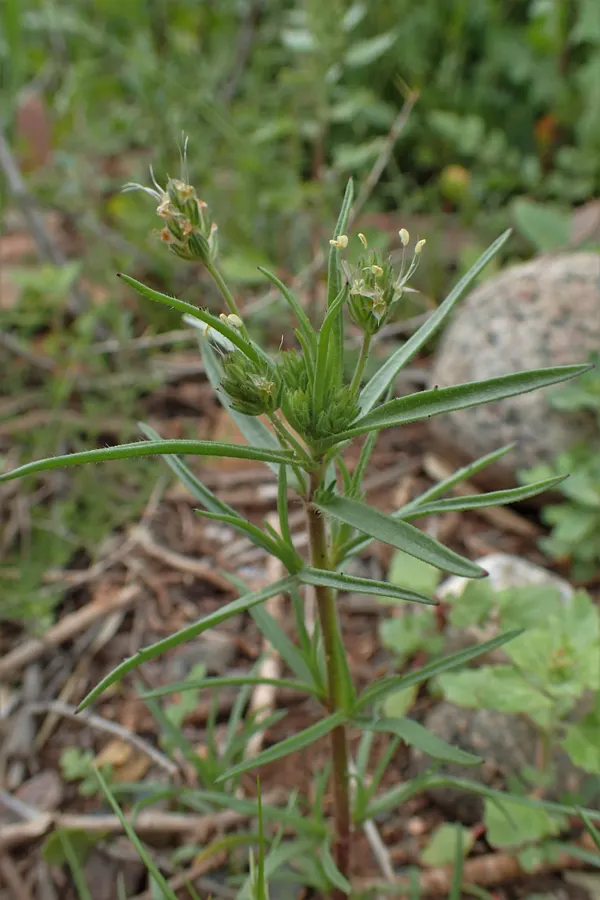
Psyllium / Black psyllium
Plantago afra
Other names: black/dark psyllium, fleawort, Psyllii semen, P. psyllium, Plantago arenaria, P. indica
Edible plantPhoto credit: Krzysztof Ziarnek, Kenraiz / Wikimedia Commons
Safety information
Safety information
Toxicity: Low. Main hazard is mechanical: oesophageal or intestinal obstruction if taken with insufficient fluid or by patients with swallowing difficulty.
Contraindications: Known/suspected GI obstruction or stenosis, faecal impaction, difficulty swallowing (dysphagia), undiagnosed acute abdominal symptoms, uncontrolled (e.g. brittle) diabetes. Do not take immediately before lying down or at bedtime.
Interactions: Can delay/reduce absorption of co-administered drugs (other oral medicines, minerals, some vitamins) - separate doses by at least ~30-60 minutes / 1 hour. May reduce insulin requirement in diabetics. Allergy/sensitisation to psyllium powder reported (occupational asthma).
Evidence level
Supported by clinical trials in humans.
Preparations
whole seed · seed
Part used: seed
Traditional use: habitual constipation, stool softening
Proposed mechanism: seed-coat mucilage absorbs water, swells, increases stool bulk/softness
Dosage note (descriptive only): take with plenty of water
Associated conditions
Edibility
Edible parts: seed/mucilage used as a food-grade dietary fibre supplement; not eaten as a meal
Toxic lookalike warning
no toxic lookalike for the supplied pharmacopoeial seed
Nutritional notes
soluble + insoluble dietary fibre; functional-food fibre source; negligible calories
Healing traditions
Related plants
Sources (2)
- EMA - Psyllii semen (EMA/HMPC)
- EMA - Psyllium seed: summary for the public (EMA/HMPC)
Sourcing & resources
Affiliate links — we may earn a small commission at no extra cost to you.