
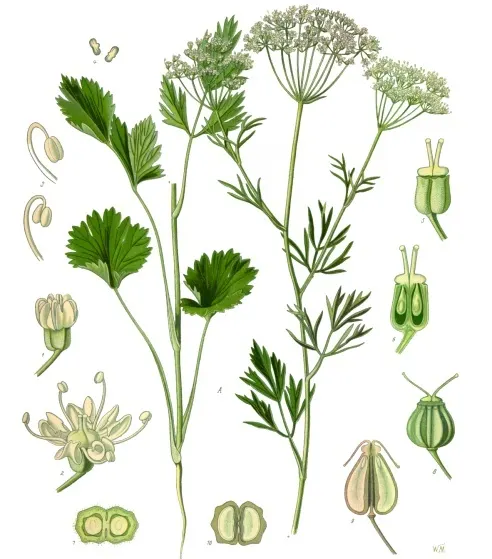
Anise / Aniseed
Pimpinella anisum
Other names: anise, aniseed, Anisi fructus, Anisi aetheroleum
Edible plantPhoto credit: Franz Eugen Köhler / Wikimedia Commons
Safety information
Safety information
Toxicity: Low as a culinary spice/tea. The essential oil contains estragole (a constituent of toxicological concern - genotoxic/carcinogenic in animal studies at high exposure); concentrated oil use should be limited and avoided in vulnerable groups.
Contraindications: Known allergy to anise or other Apiaceae (celery/fennel family). Pregnancy/lactation and children: avoid the concentrated essential oil (estragole). HMPC: medicines for adults/adolescents >12, not longer than ~2 weeks.
Interactions: Few documented. Anethole has weak phyto-oestrogenic activity in vitro - theoretical caution with hormone-sensitive conditions/therapies at high intake (clinical relevance unclear).
Pregnancy & breastfeeding: avoid concentrated essential oil in pregnancy/lactation (estragole)
Evidence level
Documented in systematic traditional medicine literature.
Preparations
infusion · fruit
Part used: fruit
Traditional use: mild digestive complaints, bloating, flatulence, cough expectorant
Proposed mechanism: trans-anethole carminative; expectorant
Associated conditions
Edibility
Edible parts: fruit (seed) widely used as a culinary spice (baking, liqueurs, teas); raw/ground
Toxic lookalike warning
as an Apiaceae, never confuse foraged umbellifer seeds/plants with deadly relatives (e.g. hemlock Conium, Cicuta); buy from a reputable spice source; star anise (Illicium verum) is unrelated despite similar flavour
Nutritional notes
spice quantities are nutritionally minor; provides essential oil (anethole), some minerals
Healing traditions
Related plants
Sources (2)
- EMA - Anisi fructus (EMA/HMPC)
- Review of Pharmacological Properties and Chemical Constituents of Pimpinella anisum (PMC, 2012)
Sourcing & resources
Affiliate links — we may earn a small commission at no extra cost to you.