
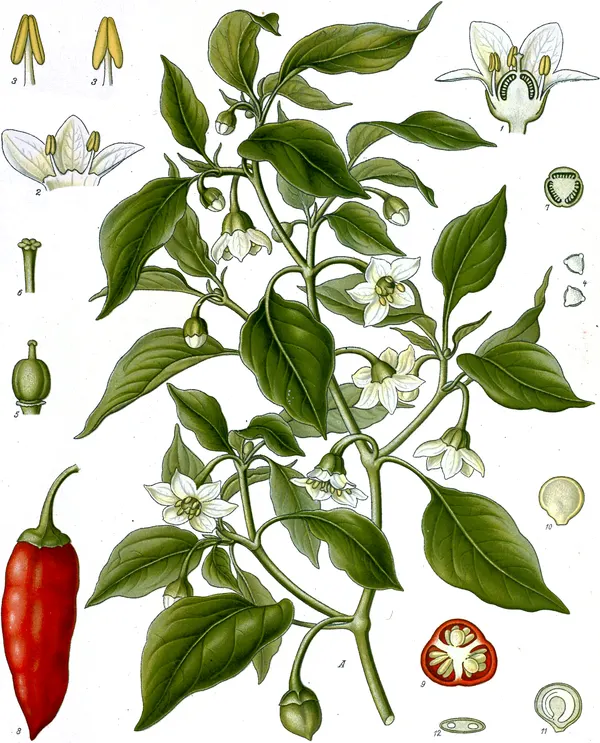
Cayenne / Chilli Pepper
Capsicum annuum(?)
Other names: Cayenne / Chilli Pepper, Cayenne
Edible plantPhoto credit: Franz Eugen Köhler, Köhler's Medizinal-Pflanzen
Safety information
Safety information
Toxicity: Burning, stinging, erythema at application site (common, usually transient). Mucous-membrane and eye contact intensely irritant; inhalation of capsaicin powder/spray causes respiratory irritation (basis of pepper spray). Ingesting very large amounts causes GI distress. | Non-toxic but intensely irritant — burning, possible contact dermatitis. | Large doses can cause vomiting, purging, stomach/bowel pain, heat and inflammation of the stomach, giddiness.
Contraindications: Do not apply to broken/irritated skin, eyes or mucous membranes. Hypersensitivity. Care in those who cannot report burning (sensory loss). | Avoid contact with broken/sensitive skin and eyes. | Use moderate doses; GI irritation in excess.
Interactions: Topical: minimal systemic interaction. Theoretical effect on cough (ACE-inhibitor cough) and on drug absorption at high oral intake - minor. | None specifically noted. | None specifically reported.
Pregnancy & breastfeeding: Not specifically addressed.
Evidence level
Supported by clinical trials in humans.
Preparations
infusion · fruit
Part used: fruit
Traditional use: Traditionally used as a systemic stimulant for poor peripheral circulation, cold hands and feet, flatulent dyspepsia and debility; externally as a rubefacient for lumbago and rheumatic pain; topical capsaicin creams for painful skin disorders.
How to prepare (traditional): Infusion: pour 1 cup of boiling water over half a teaspoon to 1 teaspoon of cayenne and infuse 10 minutes; a tablespoon of this infusion is mixed with hot water and drunk when needed. Also used externally as a rubefacient.
Dosage note (descriptive only): BHP: 30-120 mg dried herb three times daily. (Doses are small.)
tincture · fruit
Part used: fruit
Traditional use: Stimulant.
How to prepare (traditional): Tincture at 1:5 in 25% alcohol.
Dosage note (descriptive only): 0.25-1 ml three times a day.
Associated conditions
Edibility
Edible parts: fruit as a culinary spice/vegetable, raw or cooked, worldwide | peppers are a common food/spice (also gives paprika and bell peppers) | culinary spice/food (fruit)
Toxic lookalike warning
Cultivated and unmistakable. Handle hot varieties with care; wash hands.
Nutritional notes
Fruit: vitamin C, vitamin A/carotenoids, capsaicinoids; low calorie. | Carotenoids, vitamin C; flavour/food role. | Carotenoids (capsanthin, capsorubin, carotene); culinary.
Healing traditions
Related plants
Sources (5)
- Chevallier A., Encyclopedia of Herbal Medicine (2016) — Andrew Chevallier (2016)
- Hoffmann D., Medical Herbalism (2003) — David Hoffmann (2003)
- EMA/HMPC Capsici fructus monograph & public summary
- NCCIH/MedlinePlus capsaicin information
- Cochrane topical-capsaicin neuropathic-pain reviews
Sourcing & resources
Affiliate links — we may earn a small commission at no extra cost to you.