
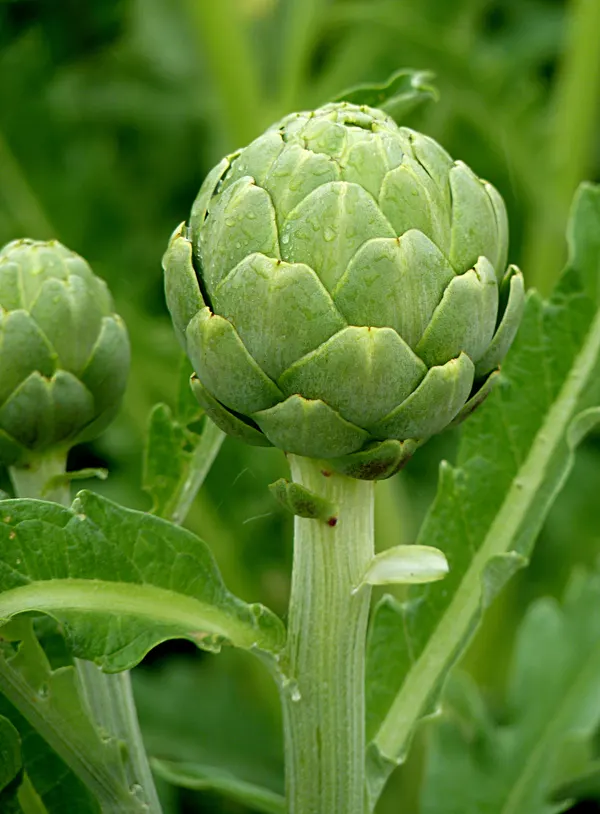
Globe artichoke
Cynara scolymus
Other names: French/green artichoke, Cynara cardunculus var. scolymus, Cynarae folium
Edible plantPhoto credit: Jamain / Wikimedia Commons
Safety information
Safety information
Toxicity: Low; mild, transient GI effects (flatulence, loose stools) possible.
Contraindications: Bile-duct obstruction or gallstones - do not use choleretics without medical advice (risk of biliary colic). Known Asteraceae (Compositae) allergy. Pregnancy/lactation: insufficient data, not recommended.
Interactions: Theoretical interaction with other cholesterol-lowering or bile-affecting agents; limited documentation. Possible additive with anticoagulants is not well established.
Pregnancy & breastfeeding: not recommended in pregnancy/lactation (insufficient data)
Evidence level
Supported by clinical trials in humans.
Preparations
dry extract · leaf
Part used: leaf
Traditional use: dyspeptic complaints, fat digestion/bile flow, high cholesterol
Proposed mechanism: cynarin, chlorogenic acid, luteolin, cynaropicrin - choleretic
food · flower head/heart
Part used: flower head/heart
Traditional use: edible vegetable, prebiotic fibre(Folk and historical sources have not been validated by clinical research.)
Proposed mechanism: inulin, polyphenols
Associated conditions
Edibility
Edible parts: immature flower head and fleshy receptacle (heart) eaten cooked; leaf bases edible; widely consumed vegetable
Toxic lookalike warning
no toxic lookalike for the cultivated vegetable
Nutritional notes
good source of dietary fibre (incl. inulin), folate, vitamin C, magnesium, potassium; rich in polyphenols (chlorogenic acid, cynarin); prebiotic functional-food role
Healing traditions
Related plants
Sources (2)
- EMA - final assessment report on Cynara cardunculus L. (syn. Cynara scolymus L.), folium (EMA/HMPC)
- Restorative Medicine - Artichoke (Cynara scolymus) monograph
Sourcing & resources
Affiliate links — we may earn a small commission at no extra cost to you.