
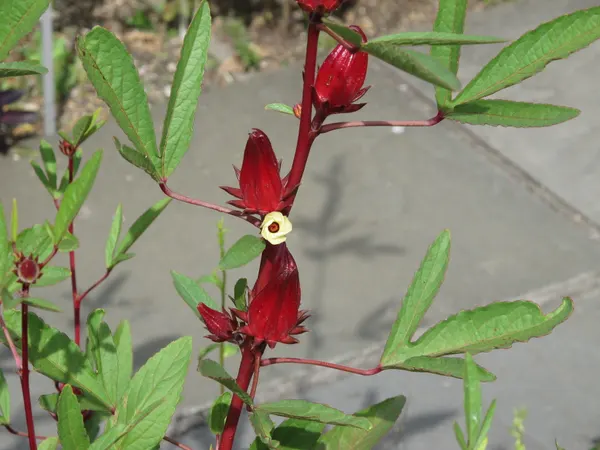
Roselle (Hibiscus / sour tea)
Hibiscus sabdariffa
Other names: Roselle, hibiscus, sour tea, agua de Jamaica, karkade, Hibisci sabdariffae flos
Edible plantPhoto credit: Invertzoo / Wikimedia Commons
Safety information
Safety information
Toxicity: Low at food/tea amounts. Very high intakes/extracts: GI upset; animal data suggest possible hepatic/reproductive effects at high doses (not at culinary tea levels).
Contraindications: Pregnancy and lactation — avoid (insufficient safety data; traditional emmenagogue/anti-fertility signals in animals); hypotension or use with antihypertensive therapy — monitor (additive BP lowering); diabetes — monitor (possible additive glucose lowering).
Interactions: May alter pharmacokinetics — increases plasma levels of hydrochlorothiazide and diclofenac (reduced clearance) and affects acetaminophen/chloroquine handling in studies; theoretical additive effect with antihypertensives and diuretics; may reduce some drug absorption.
Pregnancy & breastfeeding: Avoid (insufficient safety data; emmenagogue/anti-fertility signals in animals).
Evidence level
Supported by clinical trials in humans.
Preparations
infusion · calyx
Part used: calyx
Traditional use: mild hypertension
Proposed mechanism: anthocyanins (delphinidin-3-sambubioside, cyanidin-3-sambubioside); modest BP lowering
Dosage note (descriptive only): monitor with antihypertensive therapy
Associated conditions
Edibility
Edible parts: dried calyces brewed as tea, used in jams/syrups/drinks; fresh calyces cooked
Toxic lookalike warning
Commercial dried calyces are a defined product; for cultivated H. sabdariffa confusion is minimal — do not substitute unidentified ornamental hibiscus or other red-flowered plants
Nutritional notes
Calyces/tea rich in anthocyanins, organic acids (citric, malic, hibiscus acid) and vitamin C; functional antioxidant beverage; low calorie
Healing traditions
Related plants
Sources (4)
- Herb-drug interaction between … Hibiscus sabdariffa … and hydrochlorothiazide (PubMed)
- Hibiscus — Uses, Benefits & Dosage — Drugs.com / Review of Natural Products (EN)
- The effectiveness of Hibiscus sabdariffa in the treatment of hypertension: a systematic review (PubMed, 2010)
- Unveiling the safety, tolerability, and herb-drug interaction concerns of Hibiscus sabdariffa L. (Roselle): a systematic scoping review (Heliyon/ScienceDirect)
Sourcing & resources
Affiliate links — we may earn a small commission at no extra cost to you.