
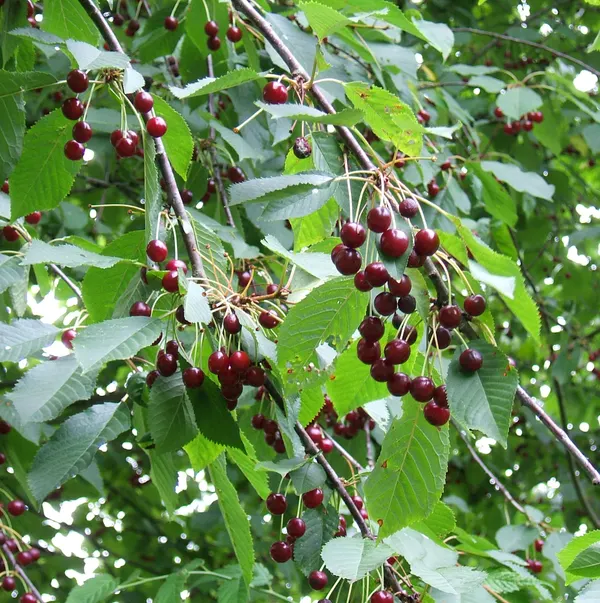
Safety information
Safety information
Toxicity: Fruit flesh: none known. Kernel/seed inside the pit and the leaves/bark are cyanogenic — contain amygdalin/prunasin that release hydrogen cyanide on crushing/digestion. Swallowing an intact pit is generally harmless; crushing/chewing kernels or consuming kernel preparations risks cyanide poisoning.
Contraindications: Do not crush/eat kernels; keep kernel preparations away from children. Stalk diuretic: caution if on diuretics or with renal impairment (theoretical additive fluid/electrolyte effect).
Interactions: Stalk diuretic — theoretical additive effect with pharmaceutical diuretics (fluid/electrolyte). Fruit — no significant documented interactions.
Evidence level
Supported by clinical trials in humans.
Preparations
edible-raw · fruit
Part used: fruit
Traditional use: edible anthocyanin-rich fruit
Proposed mechanism: anthocyanin antioxidant
infusion · fruit stalk
Part used: fruit stalk
Traditional use: mild diuretic for urinary tract / minor edema
Proposed mechanism: diuresis (increased urine volume and Na/Cl/Ca excretion)
Dosage note (descriptive only): small human study: 2.0 g powdered stalk
Associated conditions
Edibility
Edible parts: ripe fruit flesh, raw; NOT the kernel/seed (cyanogenic); avoid leaves/bark/wilted foliage
Toxic lookalike warning
Toxic ornamental Prunus (e.g. cherry laurel berries are different); wilted Prunus leaves are cyanogenic; positive ID for small stone-fruit/berries
Nutritional notes
Source of vitamin C, potassium, fiber, and anthocyanins/polyphenols (antioxidant, anti-inflammatory)
Healing traditions
Related plants
Sources (5)
- Chemical Composition, Diuretic, and Antityrosinase Activity of Romanian Cerasorum stipites (cherry stalks) (2021)
- Cyanogenic Glucosides in Almond and Sweet Cherry (Frontiers in Plant Science, 2017)
- Diuretic effect of powdered Cerasus avium (cherry) tails on healthy volunteers
- Is there a role for cherries in the management of gout? (review, 2019)
- Phenolic Profile, Antioxidant, Antidiabetic, and Antigout Potential of Stem Extracts of Four Sweet Cherry Cultivars (2023)
Sourcing & resources
Affiliate links — we may earn a small commission at no extra cost to you.