
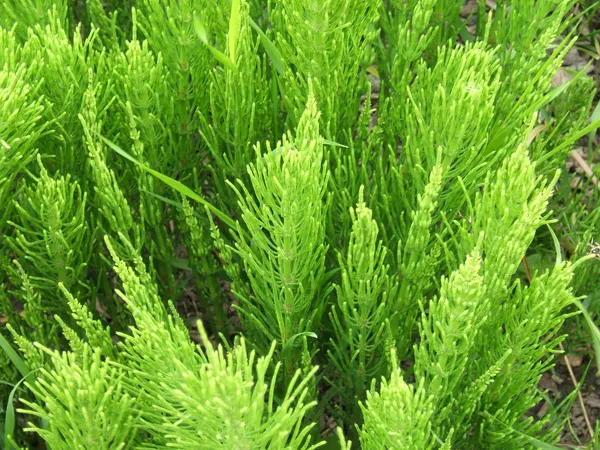
Safety information
Safety information
Toxicity: Contains thiaminase (degrades thiamine) and trace alkaloids (incl. nicotine, palustrine). | Contains thiaminase that can degrade vitamin B1 with heavy prolonged use; high silica - prolonged use can irritate kidneys. Critical: E. arvense must not be confused with the toxic marsh horsetail E. palustre, which contains poisonous alkaloids.
Contraindications: None specifically named. | Serious kidney disease (book's own warning); pregnancy/breastfeeding; prolonged use (B1 depletion).
Interactions: None reported. | Additive with diuretics; may affect lithium/electrolytes; theoretical thiamine interaction. (Safety gate.)
Pregnancy & breastfeeding: Avoid.
Evidence level
Documented in systematic traditional medicine literature.
Preparations
infusion · stem
Part used: stem
Traditional use: Traditionally used as an astringent diuretic for the genitourinary system - incontinence, bed-wetting in children, prostate problems, and to reduce haemorrhage; externally as a vulnerary.
How to prepare (traditional): Infusion: pour 1 cup of boiling water over 2 teaspoons of dried plant and infuse 15-20 minutes. A bath for rheumatic pain and chilblains is made by steeping about 100 g of herb in hot water 1 hour and adding to the bath.
Dosage note (descriptive only): Drunk three times a day. Commission E: about 6 g of herb daily.
tincture · stem
Part used: stem
Traditional use: Astringent diuretic.
How to prepare (traditional): Tincture at 1:5 in 25% alcohol.
Dosage note (descriptive only): 2-4 ml three times a day.
Associated conditions
Edibility
Edible parts: young spring shoots eaten in some cultures (caution due to thiaminase) | Not a food (medicinal/diuretic herb).
Toxic lookalike warning
Can be confused with the more toxic marsh horsetail (E. palustre). | Distinguish E. arvense from the poisonous E. palustre (marsh horsetail) before any use.
Nutritional notes
Silica source.
Healing traditions
Related plants
Sources (2)
- Hoffmann D., Medical Herbalism (2003) — David Hoffmann (2003)
- ნუნუ ღლიღვაშვილი-მარგიანი, "მედეადან დღემდე" (Nunu Ghlighvashvili-margiani, "From Medea to the present day")
Sourcing & resources
Affiliate links — we may earn a small commission at no extra cost to you.