Scurvy-grass
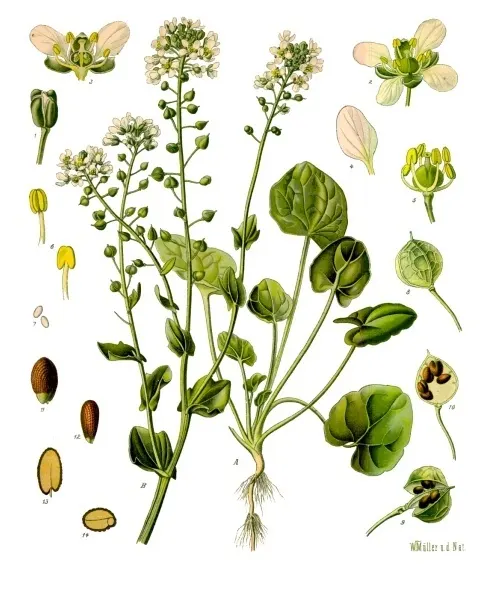
Cochlearia officinalis
Other names: Common scurvy-grass, spoonwort, Echtes Löffelkraut
Edible plantPhoto credit: Franz Eugen Köhler / Wikimedia Commons
Safety information
Safety information
Toxicity: Low as a food/leaf; pungent (glucosinolate) mustard-family flavor — large amounts may irritate the GI mucosa.
Contraindications: None notable at food amounts; pregnancy/lactation at medicinal doses not characterized; thyroid caution only at extreme glucosinolate intakes.
Interactions: None established at culinary amounts; theoretical goitrogen interaction with thyroid therapy at very high intake.
Pregnancy & breastfeeding: Not characterized at medicinal doses.
Evidence level
Found in historical texts; limited or no modern study. Folk and historical sources have not been validated by clinical research.
Preparations
edible-raw · leaf
Part used: leaf
Traditional use: antiscorbutic (vitamin C) wild salad green(Folk and historical sources have not been validated by clinical research.)
Proposed mechanism: high vitamin C (scurvy is vitamin-C deficiency)
Dosage note (descriptive only): small amounts in salads; best fresh
Associated conditions
Edibility
Edible parts: leaves raw (cress/cabbage-like, peppery) added in small amounts to salads; best fresh
Toxic lookalike warning
As a coastal/saltmarsh brassica, do NOT confuse young rosettes with other shoreline plants — notably toxic Apiaceae (e.g. hemlock water-dropwort Oenanthe crocata) on similar wet/coastal ground are deadly; positively identify spoon-shaped leaves and brassica flowers
Nutritional notes
Notably high in vitamin C (the basis of its antiscorbutic reputation); provides minerals and glucosinolates; functional wild salad green
Healing traditions
Related plants
Sources (3)
- Cochlearia officinalis Scurvy Grass, Spoonwort — Plants For A Future (EN)
- Cochlearia officinalis, Common Scurvy-grass — First Nature (EN)
- Cochlearia — Wikipedia (EN)
Sourcing & resources
Affiliate links — we may earn a small commission at no extra cost to you.