
Safety information
Safety information
Toxicity: Mild at studied doses. Diuresis can alter fluid/electrolyte balance; punarnavine studied at higher doses.
Contraindications: Pregnancy (traditional emmenagogue reputation — caution); on diuretics or in dehydration; combine cautiously with renal-impairment management.
Interactions: Diuretics (additive), lithium, antihypertensives, antidiabetics; possible additive with nephro-active drugs.
Pregnancy & breastfeeding: Pregnancy: traditional emmenagogue reputation — caution.
Evidence level
Supported by laboratory or animal studies; not yet confirmed in humans.
Preparations
powder · root
Part used: root
fresh juice · whole plant
Part used: whole plant
medicated ghee (Punarnavadi)
decoction (kwath) · root
Part used: root
Traditional use: edema, ascites, kidney/liver support, anemia
Proposed mechanism: rotenoids (boeravinone), alkaloid punarnavine, flavonoids — diuretic, anti-inflammatory, nephroprotective, hepatoprotective, immunomodulatory
Dosage note (descriptive only): Traditionally gram-scale root powder or decoction; no validated clinical dose
Associated conditions
Edibility
Edible parts: Young leaves eaten cooked as a potherb (famine/leafy green) in parts of India.
Toxic lookalike warning
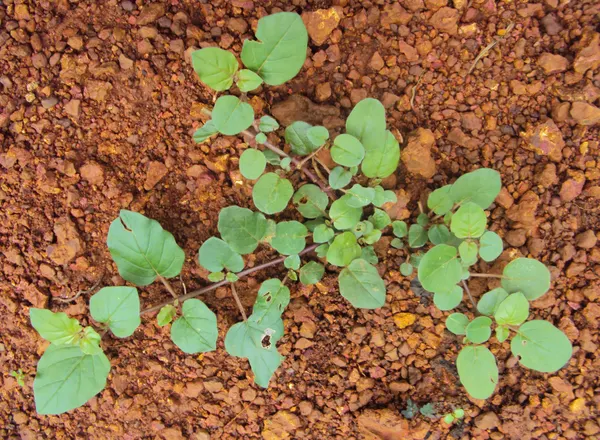
Spreading prostrate weeds resemble several toxic Euphorbia/Amaranthaceae weeds; positive ID essential before eating.
Nutritional notes
Leaves provide some minerals and used as a cooked green; not a staple.
Healing traditions
Related plants
Sources (2)
- Patel 2025, Fitoterapia (PMID 40334820)
- Dinesh Kumar 2026, BMC Complement Med Ther (PMID 42046059)
Sourcing & resources
Affiliate links — we may earn a small commission at no extra cost to you.