
Safety information
Safety information
Toxicity: None as food in moderation. Concern is very high oxalate content: contributes to hyperoxaluria and calcium-oxalate kidney-stone risk in susceptible people; reduces calcium/iron bioavailability. High vitamin K1.
Contraindications: History of calcium-oxalate kidney stones / hyperoxaluria — limit high-oxalate intake. Warfarin users — high/variable vitamin K1 intake destabilizes INR. Boiling and discarding water lowers soluble oxalate.
Interactions: Vitamin K1 antagonizes warfarin (keep intake steady). Oxalate binds calcium and non-heme iron, reducing their absorption when co-ingested.
Evidence level
Supported by clinical trials in humans.
Preparations
edible-raw · leaf
Part used: leaf
Traditional use: nutrient-dense leafy vegetable
Proposed mechanism: carotenoid + nitrate source
cooked · leaf
Part used: leaf
Traditional use: lower soluble oxalate via boiling
Dosage note (descriptive only): discard cooking water to reduce oxalate
Associated conditions
Edibility
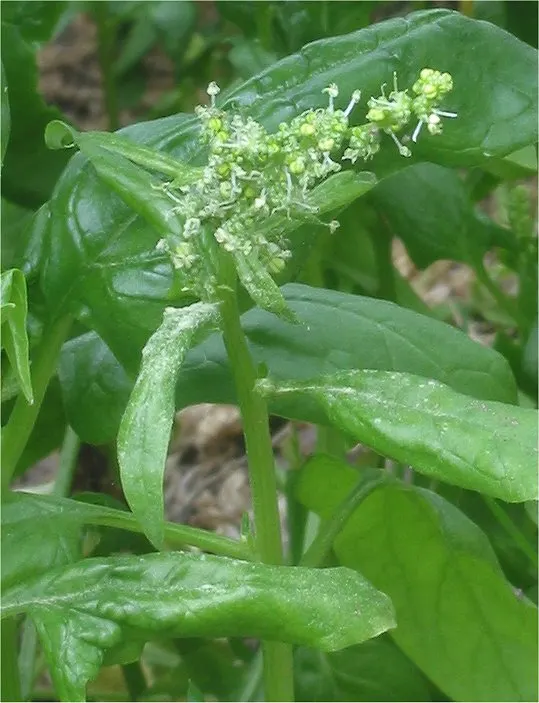
Edible parts: leaves, raw (baby leaf) or cooked
Toxic lookalike warning
Foraged confusion uncommon for cultivated spinach; positive ID required for any wild leafy green — never substitute unrelated toxic leafy plants
Nutritional notes
High in vitamin K1, folate, vitamin A (carotenoids: lutein, zeaxanthin, beta-carotene), vitamin C, magnesium, potassium, manganese; source of nitrate and non-heme iron. Anti-nutrient caveat: very high oxalate.
Healing traditions
Related plants
Sources (3)
- Dietary oxalate and kidney stone formation (2019)
- Oxalate in Foods: Extraction, Methods, Occurrence, and Health Implications (2023)
- Regulation of Oxalate Metabolism in Spinach (RNA-Seq transcriptomic analysis) (2021)
Sourcing & resources
Affiliate links — we may earn a small commission at no extra cost to you.