
Safety information
Safety information
Toxicity: Sound peeled tuber: low/none as cooked food. Toxic glycoalkaloids (α-solanine, α-chaconine) concentrate in leaves, sprouts, and green or sprouted tubers and the skin/eyes — can reach 2–5× the recommended limit. Poisoning: burning mouth, nausea, vomiting, abdominal cramps, diarrhea; severe cases neurologic. Glycoalkaloids are heat-stable (ordinary cooking does NOT destroy them).
Contraindications: Avoid eating green, sprouted, rotting, or bitter-tasting potatoes (bitterness signals high glycoalkaloid). Children and pregnancy: stricter avoidance of green/sprouted tubers.
Interactions: None significant at food intake. High potassium relevant only to potassium-restricted renal diets.
Pregnancy & breastfeeding: Stricter avoidance of green/sprouted tubers in pregnancy.
Evidence level
Supported by clinical trials in humans.
Preparations
cooked · tuber
Part used: tuber
Traditional use: carbohydrate staple(Folk and historical sources have not been validated by clinical research.)
Associated conditions
Edibility
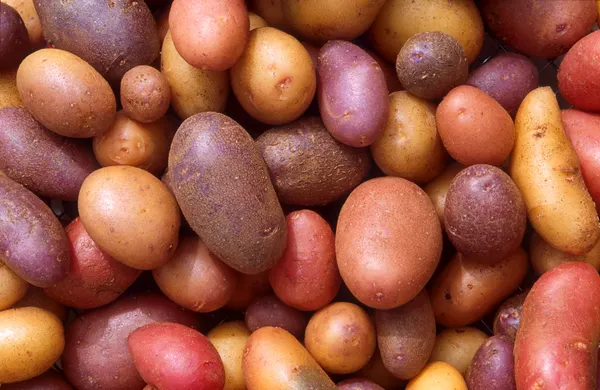
Edible parts: mature, sound, non-green tuber, cooked; NOT leaves, stems, flowers, berries, sprouts, or green/damaged tubers
Toxic lookalike warning
Potato fruit (small green tomato-like berries) are toxic — never eat. Wild Solanaceae tubers/berries must not be foraged as potatoes.
Nutritional notes
Carbohydrate (starch) staple; good source of potassium, vitamin C (with skin), vitamin B6, some fiber (skin); modest protein of good amino-acid quality. Resistant starch when cooked-and-cooled.
Healing traditions
Related plants
Sources (3)
- Glycoalkaloids in Potato Tubers — OSU Extension EM-9407
- Isolation of glycoalkaloids from green, sprouting and rotting Solanum tuberosum (Food Chemistry)
- Solanine and chaconine — JECFA / WHO Food Additives Series 30 (toxicology, safety limits)
Sourcing & resources
Affiliate links — we may earn a small commission at no extra cost to you.