
Safety information
Safety information
Toxicity: Fruit flesh: none known once ripe/bletted (intensely astringent before). Stones/kernels and leaves contain cyanogenic amygdalin — discard stones.
Contraindications: None well established for the fruit; high tannin may cause GI upset/constipation in quantity.
Interactions: Tannins may reduce iron/drug absorption in quantity; none clinically significant at food amounts.
Evidence level
Supported by laboratory or animal studies; not yet confirmed in humans.
Preparations
infusion · flower
Part used: flower
Traditional use: gentle laxative/'blood-cleansing' tea
Proposed mechanism: anthocyanins, tannins; flower mild laxative
cooked · fruit
Part used: fruit
Traditional use: preserves, fruit leather, sour sauce (after frost); steeped in spirits(Folk and historical sources have not been validated by clinical research.)
Dosage note (descriptive only): after first frosts
edible-raw · fruit
Part used: fruit
Traditional use: only when fully bletted(Folk and historical sources have not been validated by clinical research.)
Dosage note (descriptive only): fully bletted only
Associated conditions
Edibility
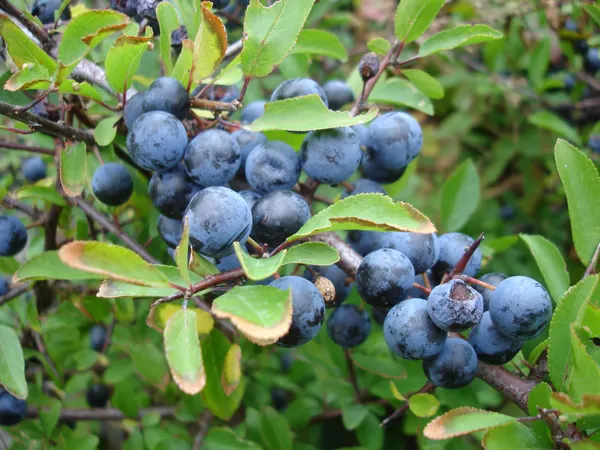
Edible parts: sloes cooked (or raw only when fully bletted by frost); flowers for tea
Toxic lookalike warning
Sloes are small single-stone blue-black plums on a very thorny shrub; confirm Prunus spinosa (thorns, early white blossom before leaves), discard the stones, and avoid confusion with other dark berries (e.g. buckthorn, privet, which are toxic).
Nutritional notes
Vitamin C, anthocyanins and tannins, organic acids; astringent functional fruit best cooked.
Healing traditions
Related plants
Sources (1)
- Bussmann et al., A comparative ethnobotany ... Republic of Georgia, J Ethnobiol Ethnomed 2016;12:43
Sourcing & resources
Affiliate links — we may earn a small commission at no extra cost to you.