
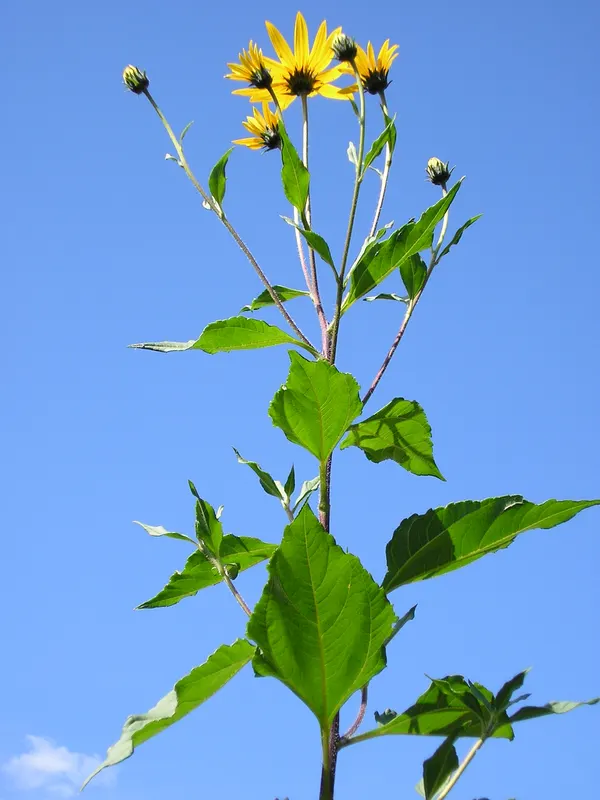
Jerusalem artichoke
Helianthus tuberosus
Other names: Jerusalem artichoke
Edible plantPhoto credit: Wikimedia Commons contributor
Safety information
Safety information
Toxicity: Low. High inulin causes pronounced flatulence/bloating, worse when raw and in large portions.
Contraindications: IBS / fructan (FODMAP) intolerance — can cause marked GI symptoms.
Interactions: None established; inulin may modestly blunt post-meal glucose.
Evidence level
Reported in folk medicine sources; not clinically validated. Folk and historical sources have not been validated by clinical research.
Preparations
raw · tuber
Part used: tuber
Traditional use: sliced(Folk and historical sources have not been validated by clinical research.)
cooked · tuber
Part used: tuber
Traditional use: roasted/boiled/puréed(Folk and historical sources have not been validated by clinical research.)
Associated conditions
Edibility
Edible parts: Tubers raw or cooked.
Toxic lookalike warning
Knobbly tubers are distinctive, but the tall yellow-flowered above-ground plant resembles other Helianthus and tall composites; food risk low because the tuber is eaten — only harvest tubers from a confirmed H. tuberosus stand (avoid digging unknown tubers, some toxic).
Nutritional notes
Tuber is one of the richest dietary sources of inulin (prebiotic fructan), plus potassium, iron, thiamine; low in starch. Functional prebiotic root.
Healing traditions
Related plants
Sources (2)
- USDA FoodData Central (Jerusalem artichoke, raw)
- inulin/prebiotic food-composition literature
Sourcing & resources
Affiliate links — we may earn a small commission at no extra cost to you.