
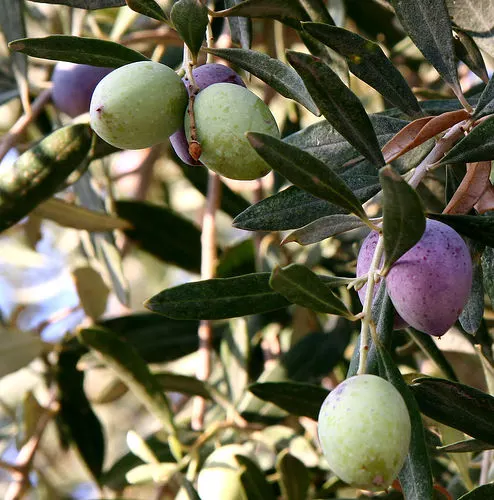
Olive (leaf / oil)
Olea europaea
Other names: olive tree, zetiskhili (Geo.)
Edible plantPhoto credit: Nickfraser / Wikimedia Commons
Safety information
Safety information
Toxicity: leaf: low; mild GI upset, possible hypotension/headache at higher doses. Oil: food-safe.
Contraindications: leaf extract with antihypertensive therapy (additive hypotension), hypoglycemia risk with diabetes meds; pregnancy/breastfeeding (leaf-extract data limited).
Interactions: additive with antihypertensives and antidiabetics; theoretical with anticoagulants.
Pregnancy & breastfeeding: leaf-extract data limited in pregnancy/breastfeeding
Evidence level
Supported by clinical trials in humans.
Preparations
dry extract · leaf
Part used: leaf
Traditional use: hypertension, blood pressure
Proposed mechanism: oleuropein/hydroxytyrosol
food (oil) · fruit/oil
Part used: fruit/oil
Traditional use: Mediterranean-diet cardiovascular benefit
Proposed mechanism: monounsaturated fat, polyphenols
Associated conditions
Edibility
Edible parts: fruit (cured olives) and olive oil are foods; raw olives are bitter/inedible until cured (debittered)
Toxic lookalike warning
no major toxic lookalike for the cultivated tree, but do not confuse ornamental/wild fruits
Nutritional notes
EVOO - monounsaturated fat (oleic acid), vitamin E, polyphenols (hydroxytyrosol, oleuropein); olives provide healthy fats, sodium (if brined), fiber
Healing traditions
Related plants
Sources (3)
- Olive leaf extract vs Captopril RCT (Phytomedicine, 2011)
- Olive leaf+fruit extract in hypertension/metabolic syndrome (Antioxidants/PMC, 2020)
- Phenolic-rich olive leaf RCT (Eur J Nutr, 2017)
Sourcing & resources
Affiliate links — we may earn a small commission at no extra cost to you.