
Safety information
Safety information
Toxicity: Mild. Coumarin-containing (the 'fresh-hay' scent); large/prolonged use -> coumarin caution.
Contraindications: Pregnancy/lactation (insufficient data — avoid); anticoagulant therapy (coumarin caution); diabetes-related diuresis cautions (folk).
Interactions: Theoretical additive with anticoagulants (coumarins); additive with diuretics.
Pregnancy & breastfeeding: Pregnancy/lactation: insufficient data — avoid.
Evidence level
Reported in folk medicine sources; not clinically validated. Folk and historical sources have not been validated by clinical research.
Preparations
wash/poultice (folk) · flowering herb
Part used: flowering herb
rennet/cheese-curdling (traditional) · flowering herb
Part used: flowering herb
infusion (tea) · flowering herb
Part used: flowering herb
Traditional use: diuretic and skin complaints (eczema, psoriasis — wash/tea), folk 'glandular'/lymphatic conditions; traditionally to curdle milk for cheese(Folk and historical sources have not been validated by clinical research.)
Proposed mechanism: iridoid glycosides (asperuloside), flavonoids, coumarins — coumarin content is the main caution
Associated conditions
Edibility
Edible parts: Flowering tops historically used to curdle/colour cheese and flavour drinks; not a staple food.
Toxic lookalike warning
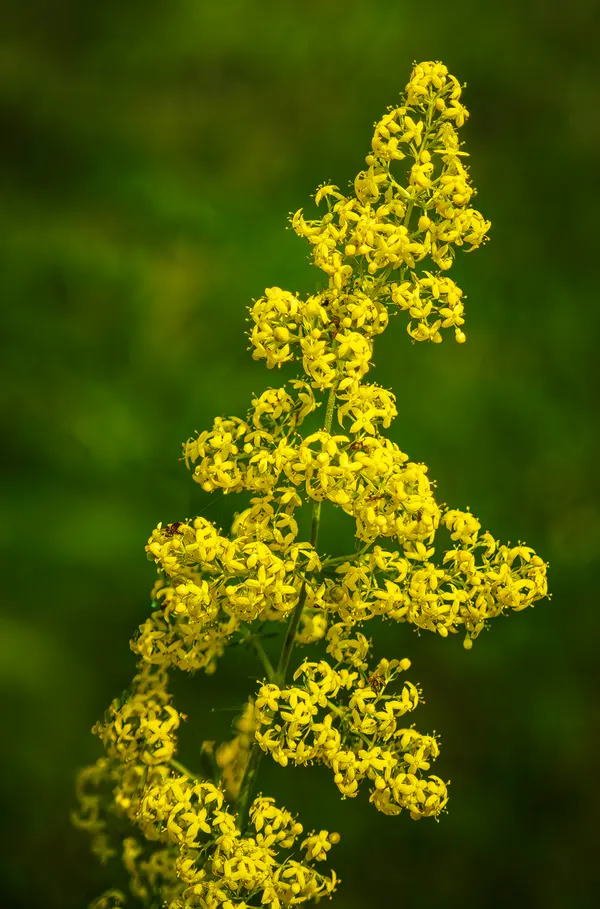
Whorled narrow leaves and frothy yellow flowers identify Galium verum; distinguish from cleavers (Galium aparine, white flowers) and bedstraw relatives.
Nutritional notes
Minor; traditional rennet/flavouring role.
Healing traditions
Related plants
Sources (1)
- general Galium phytochemistry/coumarin literature; Slavic folk-plant context
Sourcing & resources
Affiliate links — we may earn a small commission at no extra cost to you.